



What is "free rent"? Learn about "free rent" – something foreigners renting rooms in Japan should know about to avoid losing out.

One thing that surprises foreigners when signing a lease for a rental property in Japan is the high initial costs. A survey conducted in March 2025 revealed that the estimated initial cost is roughly equivalent to 4 to 6 months' rent. In other countries, a deposit of only one month's rent is often sufficient, so the high initial costs of rental properties in Japan may seem unusual.
One way to avoid the high initial costs of rental housing in Japan is through rent-free periods.
This article explains what rent-free periods are and how to make the most of them, in a way that is easy for foreigners to understand.
1.What is free rent?

In short, "free rent" refers to a contract condition where rent is free for a certain period of time.
Normally, the obligation to pay rent begins from the day you move in, but this will be waived for a certain period (1 to several months).
In Japan, the following initial costs are required when moving into a rental property:
- Security deposit: 1 to 3 months' rent
- Key money: 1-2 months' rent
- Advance rent: 1 month's rent
- Brokerage fee: 0.5 to 1 month's rent
In total, you'll still have to pay the equivalent of 4 to 6 months' rent before moving in.
However, with properties offering free rent, the rent is free for a certain period, which ultimately helps to reduce initial costs.
With properties offering free rent, you're less likely to be charged advance rent due to the nature of the system, which helps to reduce those costs.
In summary, "free rent" refers to properties where rent is free for a certain period after moving in. This system helps reduce the often high initial costs by eliminating the need for rent.
For more details about security deposits and key money, please see here.
Why is the rent free?
Free rent is a great deal for tenants, but why is the rent free?
There are circumstances and reasons on the landlord's side as well.
- I want to eliminate vacancies: For landlords, vacancies represent a significant economic loss. Therefore, they want to eliminate vacancies even if it means offering rent-free periods.
- Differentiation from other properties: In areas with many rental properties such as apartments and condominiums, properties offering free rent appear more attractive than other rooms.
- Off-season measures: In the Japanese rental market, January to March is the peak season, and there are fewer prospective tenants during other times of the year, especially in the summer. As a measure to combat this off-season, free rent is sometimes offered as part of a promotional campaign.
- Strategies for selling unpopular properties: Properties that are old or far from train stations are generally unpopular. As an incentive for such properties, free rent may be offered.
- Avoiding the risk of early departure: Properties with free rent often come with a condition that "a penalty fee will be incurred if the tenant moves out within X years." This helps to avoid the risk of early departure.
In short, rent-free periods are a win-win system that benefits not only tenants but also landlords.
Instead of thinking, "Free rent? That sounds suspicious!", please take advantage of it.
2.Points to note regarding rent-free periods

While free rent is a very helpful system that can reduce high initial costs, there are a few points to keep in mind when using it.
Early termination may incur a penalty fee.
As briefly explained above, properties with free rent often come with a condition (early termination penalty) that states, "If you terminate the contract (move out) within a certain period, you will have to pay the rent for the period that was previously free as a penalty."
For example, properties advertised as offering "one month free rent" often have a clause stating that if you terminate the lease within one year of moving in, you will be charged a penalty equivalent to one month's rent. This is a system designed to recover the free rent as a penalty.
If you are looking for temporary housing in Japan while searching for a permanent home, you should consider using a short-term monthly rental apartment (a rental property that can be contracted on a monthly basis) rather than a property with free rent.
Rent-free period
Free rent is not a legally mandated system, but rather a service offered under the rental agreement. Therefore, even if a property is advertised as having "free rent," the duration and conditions for free rent will vary from property to property.
Generally, one month's rent is waived, but sometimes it's only for about two weeks, and in the case of properties that have been vacant for a long time, it can be waived for two to three months. In some cases, it is applied as a prorated amount of rent waived from the contract start date to the move-in date.
Because of these differences, be sure to check the rent-free period, start date, and applicable conditions before signing the contract.
The rent may be higher than the market rate.
Sometimes, properties advertised as offering free rent may actually have monthly rents that are slightly higher than the surrounding market rate.
For example, in an area where the average rent for similar properties is 90,000 yen, a property offering free rent might be advertised as "100,000 yen rent + 1 month free rent."
While the burden may be lighter in the short term, the total amount paid over two years may end up being higher than other properties.
It's important not to jump at the term "free rent" alone, but to compare and consider the surrounding rental market and the total amount you'll pay.
In many cases, things other than rent are not free.
With free rent offers, only the rent itself is usually waived; other monthly costs such as management fees and common area charges are almost never waived.
Therefore, keep in mind that even with properties that offer free rent, you may still have to pay some fees.
Calculate the total cost
When comparing properties, it's important to consider not only whether or not there's a rent-free period, but also to add up "all costs incurred during the contract period." Specifically, calculate the total amount payable, including initial costs such as security deposit, key money, and brokerage fees, rent excluding the rent-free period, management fees, common area fees, renewal fees, and penalties for early termination.
For example, let's calculate the cost if you live there for two years.
| property | rent | Management fee | Free rent | Total amount over 2 years |
| A | 90,000 yen | 5,000 yen | none | 2,280,000 yen |
| B | 100,000 yen | 5,000 yen | 1 month | 2,420,000 yen |
As you can see, property B will cost ¥140,000 more in total than property A. Don't just focus on the benefits of rent-free periods; always simulate the long-term costs before making a decision.
3.How to rent a room with no rent
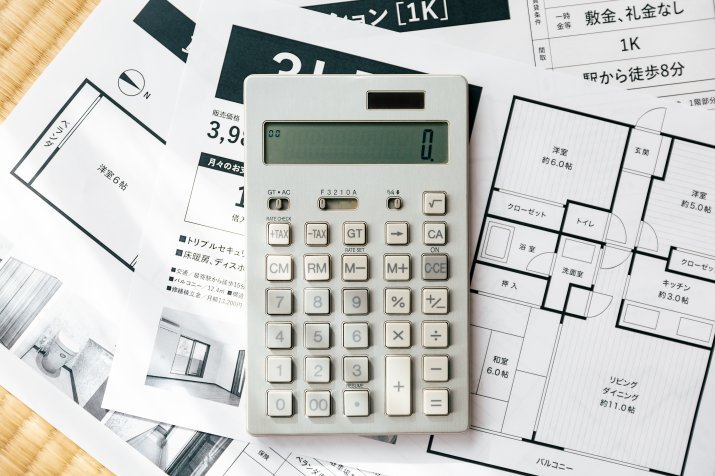
We've looked at the mechanism and points to note regarding free rent, but now I'll explain how to actually rent a property with free rent.
How to search on real estate portal sites
Real estate portal sites are extremely convenient for foreigners looking for rental housing.
Some real estate portal sites may include "free rent" as a search criterion.
By checking that condition, you can compare and consider only properties that offer free rent.
Negotiate directly
Even for properties that don't offer free rent, you might be able to get the first month's rent waived by negotiating directly.
For example, if your move-in date is the 10th, they might give you 20 days free of charge.
While success isn't guaranteed, there's definitely room for negotiation.
Looking for a room during the off-season
When searching for an apartment during the off-season, when demand for real estate is lower, it tends to be easier to negotiate for free rent. Specifically, the following times are ideal:
- Mid-April to early August : After the peak season for entering school and finding employment (February-March) and before the summer holidays, fewer people are looking for properties, making it easier to negotiate for free rent during this period.
- November to December : As the demand for moving services subsides towards the end of the year, landlords may be more flexible with terms and conditions compared to the peak season.
During the off-season, there is less competition, so real estate companies and owners are often more flexible with terms and conditions. If your arrival in Japan or your apartment search coincides with the off-season, we highly recommend negotiating for free rent.
4.Final checklist at the time of contract signing

When signing a lease for a property with a free rent period, please be sure to check the following points.
- Rent-free period start date: When does the rent-free period begin?
- Rent-free period: How long is the free period?
- Clause regarding early termination penalty: duration and amount
- Scope of what is covered by the exemption: Is it just the rent, or does it also include management fees?
5.Summary: Make good use of rent-free periods to reduce initial costs.
Free rent is a convenient system that helps reduce high initial costs by making the rent free for a certain period.
However, there are some points to note, such as "penalties for early termination," "rent set higher than the market rate," and "management fees are required separately."
Before signing a contract, be sure to compare the total cost and only sign a contract with terms you are satisfied with.