



What's the difference between "city gas" and "propane gas"? Which should you choose if you live in Japan?
While I'm looking forward to my new life in Japan, there are some things that are difficult for foreigners to understand.
Speaking of housing, "gas" is one example of this.
This is because Japan has two types of gas used for residential purposes.
Therefore, in this article, we will explain in detail the two types of gas: "city gas" and "propane gas."
From the differences between the two types of gas to price comparisons and the process of starting to use gas, this guide provides comprehensive information about gas.
Please use this as a reference so that you can start your new life in Japan without any worries.
1.Difference between city gas and propane gas
First, let's understand the difference between city gas and propane gas (LP gas).
Supply method
The biggest difference between city gas and propane gas is the method of supply.
- City gas: Supplied to each home through underground gas pipes (pipes).
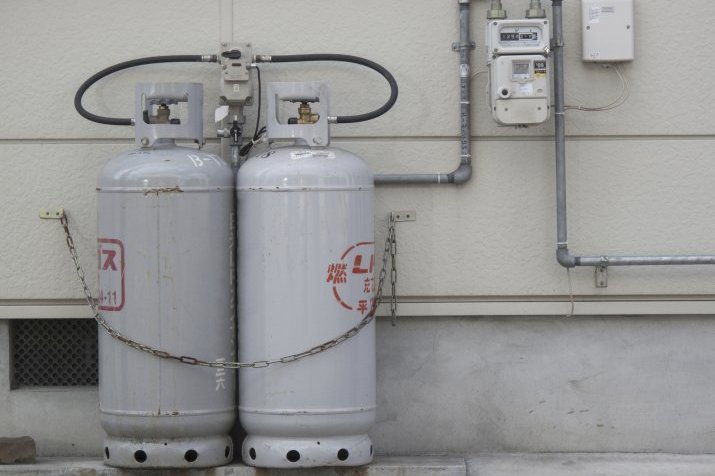
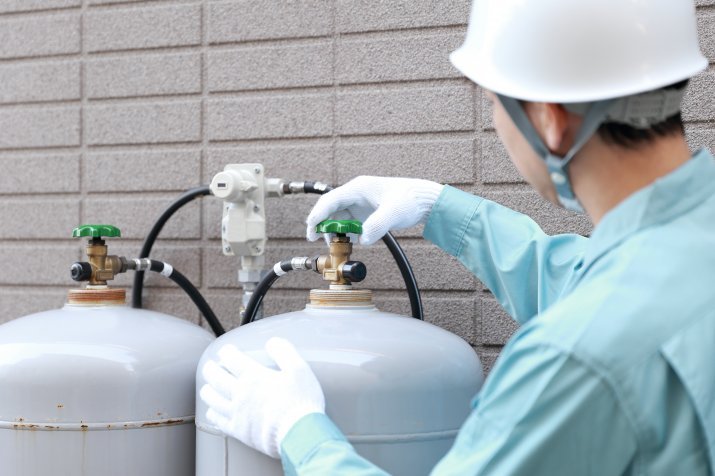
- Propane gas: Gas is supplied from gas cylinders installed in each home.
The method of supplying city gas is similar to that of water. Gas is supplied to each household through underground pipelines.
On the other hand, with propane gas, the gas company installs gas cylinders like the one shown in the image above, and the gas is supplied from these cylinders. When the gas runs out, the gas company replaces it with a new cylinder.
Supply area
The difference in supply methods between city gas and propane gas directly translates to differences in the supply areas.
- City gas: Primarily found in urban areas and densely populated regions.
- Propane gas: available nationwide
Since using city gas requires pipelines, it is inevitably concentrated in urban areas where the infrastructure is already in place.
On the other hand, propane gas can be supplied virtually anywhere, including rural areas and remote mountainous regions, simply by installing gas cylinders.
Raw materials and calorific value
City gas and propane gas use different raw materials.
- City gas: Natural gas
- Propane gas: Liquefied petroleum gas (LP gas)
Natural gas, the raw material for city gas, is mainly composed of methane and is also known as a clean energy source.
On the other hand, propane gas is primarily made from propane and butane, and is liquefied by applying pressure.
Differences in the raw materials used for gas directly affect its calorific value.
Generally speaking, propane gas is said to have twice the calorific value of natural gas. This means that the same amount of gas can yield a higher calorific value from propane gas.
Note: Differences in compatible devices
Because city gas and propane gas differ in their raw materials and calorific value, you will need to prepare dedicated gas stoves and water heaters for each.
Therefore, when moving to a new home in Japan, you need to check the type of gas used in the property and prepare the appropriate equipment.
While some issues can be resolved by replacing parts, forcing the problem to continue could lead to serious accidents such as fires or gas leaks. Always consult a professional.
Fee
We've looked at the differences between city gas and propane gas so far, but the biggest difference is actually the price.
- City gas: Price is regulated as it is a public utility.
- Propane gas: Deregulated pricing
City gas is considered a public infrastructure, just like electricity and water, and government approval is required to set its rates.
On the other hand, propane gas prices are freely set, so they vary from gas company to gas company. And because of the unregulated pricing, propane gas is generally more expensive than natural gas.
2.Price comparison of city gas and propane gas
So, specifically, how much do the prices of city gas and propane gas differ?
Here, we compared the prices of city gas and propane gas using the following model case.
[Model Case]
I live alone. I use about 10m³ of city gas per month for bathing, showering, washing dishes, and simple cooking.
[Price Comparison Chart (Estimate)]
| City gas (Tokyo Gas) | Propane gas (national average) | |
| Basic fee | Approximately 759 yen | Approximately 2,000 yen |
| Unit price based on usage | Approximately 145 yen/m³ | Approximately 700 yen/m³ |
| Usage amount | 10 m³ | 5m³ |
| Usage-based charges | 1,450 yen | 3,500 yen |
| Total monthly fee | Approximately 2,209 yen | Approximately 5,500 yen |
Thus, a simple calculation shows that propane gas is more than twice as expensive as natural gas.
The reason why the cost of using propane gas is halved is because there is a twofold difference in calorific value.
However, this is only a guideline. This is because propane gas prices vary greatly depending on the region and gas company, with the unit price ranging from 400 to 800 yen/m³.
Nevertheless, the fact remains that, on average, there is a significant difference in monthly costs between city gas and propane gas.
Reference: How much does propane gas cost per cubic meter? | Propane Gas Consumers Association
3.How to tell the difference between city gas and propane gas.

There is a significant difference in price between city gas and propane gas, so if possible, you should choose a property that uses city gas.
So, how can we verify that?
Check on the website
The easiest way to check is to look at a real estate portal site.
For example, in the case of Mooovin, a real estate portal site for foreigners, you can search for properties by checking either city gas or propane gas in the "Interior Amenities" section.
If there are city gas pipelines in the area where you want to live, you should be able to find a room you like from among properties that use city gas.
Check with the person in charge.
If a real estate portal site doesn't specify whether the property uses city gas or propane gas, it's best to ask the agent directly.
Since you can often ask questions through the contact form or email on the website, it's a good idea to try contacting them first.
In any case, changing the gas provider after moving in is not practical, so be sure to check thoroughly beforehand.
4.Advantages and disadvantages of city gas and propane gas
Whether you end up living in a property that uses city gas or propane gas, knowing the advantages and disadvantages of each will allow you to live more wisely.
Advantages and disadvantages of city gas
- Advantages: Low price. Stable supply.
- Disadvantages: Not available in all areas. Lower calorific value than propane gas.
The biggest advantage of city gas is, of course, its low cost. Also, unlike propane gas, you don't have to worry about running out of cylinders or waiting for deliveries for replacements.
On the other hand, because its calorific value is lower than that of propane gas, it may take longer for the heating to start working.
Advantages and disadvantages of propane gas
- Advantages: Can be used anywhere in the country. Its high heat output makes it advantageous for cooking.
- Disadvantages: High cost. Requires the hassle of changing cylinders.
Because propane gas has a high calorific value, gas stoves that use it generally have a strong heat setting. This is a major attraction for people who enjoy cooking.
However, the high cost is a major drawback. Since prices vary depending on the gas company, it's a good idea to compare and consider different gas companies if possible.
5.The process of contracting with a gas company and activating the gas supply.
Finally, let's look at the process from contracting with the gas company upon moving in to getting the gas turned on.
For city gas: Contact your local gas company.
For city gas, the gas company you use depends on the area you live in. For example, if you live in Tokyo, you would contact "Tokyo Gas," and if you live in Osaka, you would contact "Osaka Gas." Please contact the main gas company in your area to proceed with the necessary procedures.
- Contract application: Once your moving date is decided, apply to start service by calling or through the website of your nearest city gas company.
- Prepare the necessary information: Provide your planned move-in date, address, name, contact information, and gas meter number (if known).
- Scheduling the gas activation date and time: The gas company will provide you with a list of possible dates and times for a technician to visit your home, so please coordinate a date and time that works for you.
- Gas Activation Supervision: On the day of activation, our staff will inspect the gas meter and perform the activation procedure. After safety checks are completed, you will be able to use the gas.
- Billing begins: Charges will be incurred from the date of activation, based on gas usage.
For propane gas: Contact your designated gas company.
In the case of propane gas, the landlord usually designates the gas company you can use. Please contact that gas company and proceed with the necessary procedures.
- Confirm the supplier: Check the name and contact information of the designated propane gas supplier from your lease agreement or from your landlord or property management company.
- To apply for service: Call the designated company and provide your moving date, address, and name to apply.
- Coordinating cylinder installation: We will coordinate the date for cylinder installation with the supplier. Please ensure that the installation space for the cylinder is secured in advance.
- Gas connection supervision: Under the supervision of staff, the cylinder will be connected and a leak test will be performed. Gas will be available for use after safety checks are completed.
- Billing method: Usage is measured by meter or by the number of deliveries, and billing is done at the end of the month.
Please note that someone must be present when the bottle is opened (for initial use).
Whether you use city gas or propane gas, a staff member will visit your home to turn on the gas before you can start using it. The resident (or their representative) must be present, so please specify a convenient time.
In cases where you have already signed the contract before coming to Japan, or if you are unable to attend due to scheduling conflicts, the landlord or management company may be able to be present. Be sure to check in advance.
6.Summary: Use gas wisely to make life in Japan more comfortable!
Finally, let's review the differences between city gas and propane gas and see who each is recommended for.
[The difference between city gas and propane gas]
| city gas | Propane gas | |
| Supply method | pipeline | gas cylinder |
| Supply area | Centered on urban areas | Anywhere in the country |
| raw material | natural gas | Liquefied petroleum gas (LP gas) |
| amount of heat | About half the price of propane gas | About twice the price of city gas |
| Fee | Cheap (utility rates) | High (free rate) |
| gas appliances | Specialized equipment | |
Which should I choose?
✅People for whom city gas is recommended
- People who want to keep their monthly gas bill low
- People living in urban areas or densely populated areas
✅ Who should use propane gas?
- People living in rural areas or suburbs
- People who love cooking and want high heat
When searching for a place to live in Japan, it's important to check the type of gas used beforehand, as this significantly impacts utility costs and lifestyle. Check real estate websites or contact agents directly to find a property that suits your needs.