



This article explains the initial costs of living alone in Japan! We'll cover estimated costs and tips for keeping expenses down.

To live alone in Japan, you need a significant amount of money upfront.
You might be thinking about moving to Japan, but you're probably wondering how much the initial costs will be.
This time, we'll introduce the estimated initial costs needed for living alone and tips on how to keep those costs down.
1.Rental contract costs
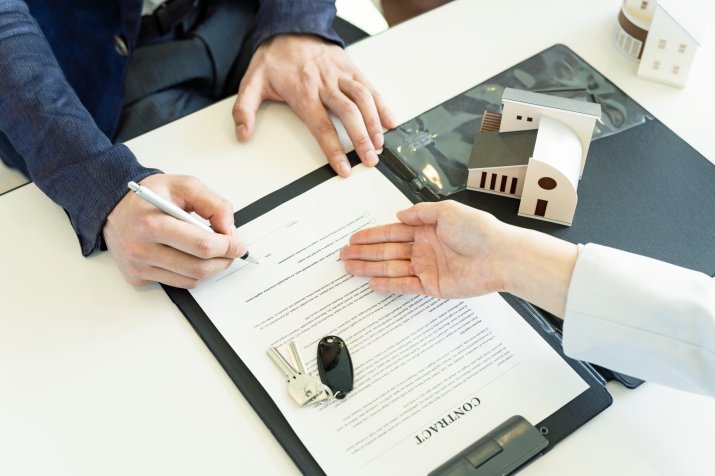
One of the initial costs required when living alone is the cost of signing a rental agreement.
In Japan, the initial costs associated with a rental agreement are generally said to be equivalent to 4 to 6 months' rent.
This section introduces the types of costs and the average costs for each.
Rent, common area fees, management fees
Rent, common area fees, and management fees are paid as initial costs, covering up to two months' worth of expenses: the month of move-in and the following month.
If you move in partway through the month, it's common practice to calculate the rent for the month on a pro-rata basis.
Common area maintenance fees cover the costs of maintaining the shared areas, and are typically around 5-10% of the rent.
Security deposit
A security deposit is a guarantee payment that you give to the landlord when renting a room, and it is paid only once upon moving in.
The security deposit paid to the landlord is used to cover the costs of repairing any damage to the room caused by non-payment of rent or negligence during tenancy.
If the security deposit is not used as a guarantee, it will be refunded to the tenant upon vacating the property.
The typical security deposit is equivalent to 1 to 3 months' rent, although some properties offer a zero security deposit.
key money
Key money is a gratuity paid to the landlord, and like a security deposit, it is a one-time payment made upon moving in.
Key money is a uniquely Japanese custom that originated as a way of expressing gratitude to landlords who rented out rooms during a time when housing was scarce.
The typical cost of key money is equivalent to one to two months' rent, although some properties offer no key money at all.
Brokerage fee
The brokerage fee is a fee paid to the real estate company that introduced you to the property.
In Japan, it is common to enter into a rental agreement through a real estate company.
Real estate companies handle property brokerage and introduction, as well as the conclusion of lease agreements.
If you enter into a contract directly with the landlord without going through a real estate company, you will not need to pay a brokerage fee.
The typical brokerage fee is equivalent to 0.5 to 1 month's rent.
Fire insurance premium
Fire insurance is a type of insurance that compensates for damage to furniture and home appliances caused by fire, water leaks, etc.
The landlord has insurance for the building itself, while the fire insurance that tenants take out covers accidents that occur inside the room.
While fire insurance is optional, some landlords require tenants to have insurance to cover potential accidents.
The cost of fire insurance varies depending on the coverage, but the average is around 8,000 to 16,000 yen per year.
cost of replacing locks
The key replacement fee is for replacing the keys left behind by the previous tenant.
While it's generally the tenant's responsibility to pay for changing the locks, some properties have landlords who cover the cost.
The cost of replacing a lock varies depending on the type of lock, but the average price is around 5,000 to 20,000 yen.
Guarantee company fee
The guarantee company fee is the cost paid when using a guarantee company instead of having a co-signer.
In Japan, rental properties require a co-signer to cover rent arrears by tenants.
Recently, more and more landlords are requiring tenants to use a guarantee company instead of having a co-signer as a condition of tenancy.
If the landlord does not require the use of a guarantee company and you can provide a co-signer, you will not need to pay a guarantee company fee.
The typical fee for using a guarantee company is equivalent to 0.5 to 1 month's rent.
2.Moving expenses

The second initial expense needed when starting to live alone is moving expenses.
Moving costs vary greatly depending on the amount of belongings, the distance to the destination, and the time of year.
How to choose a moving company
When choosing a moving company, be sure to get quotes from multiple companies.
Moving companies can be broadly categorized into large national companies that operate throughout Japan and smaller, locally-based companies that only handle short-distance moves.
While large companies offer comprehensive services, they also tend to be less accommodating to price negotiations.
While locally-based services can keep costs down, they also tend to have inconsistencies in quality and support depending on the provider.
In Japan, there are moving comparison websites such as "SUUMO Moving Estimate" and "Moving Samurai" that allow you to easily get quotes from multiple moving companies.
You can also check reviews and ratings for each company, so please use this when looking for a moving company.
Ways to save money on moving expenses
Moving costs can be reduced by decreasing the amount of belongings and minimizing the services requested from the moving company.
- Get rid of unwanted items to reduce the amount of stuff you own.
- Packing and unpacking your own belongings
- Prepare cardboard boxes and packing materials.
Disposing of large furniture and appliances in advance can significantly reduce the amount of belongings you need to move, saving you money.
By preparing packing materials and doing the packing and unpacking yourself, you can reduce the amount of work you need to do for the moving company, thus further lowering costs.
Reducing the amount of belongings and the amount of work required from the moving company is key to saving on moving costs.
3.Purchase costs of furniture and appliances
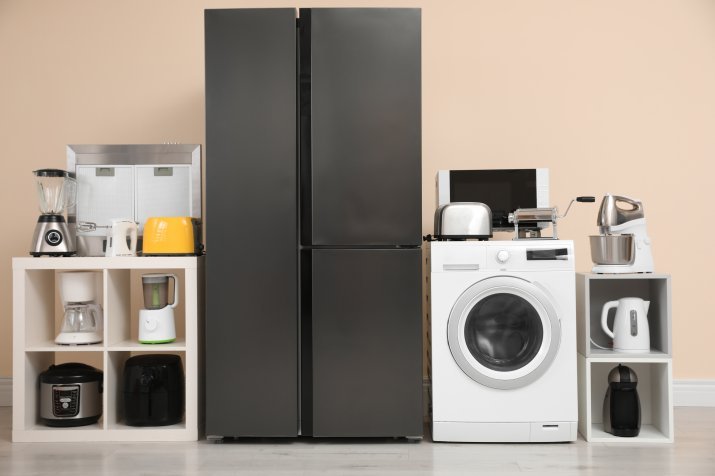
The third initial expense needed when living alone is the cost of purchasing furniture and appliances.
To start a new life, there are essential pieces of furniture and appliances you should have, and others you might want to acquire if you have the means.
Minimum necessary furniture and appliances and estimated purchase costs
Here's a guide to the essential furniture and appliances you should have, along with estimated costs.
| Minimum necessary furniture and appliances | Estimated purchase cost |
| refrigerator | From 18,000 yen |
| washing machine | From 27,000 yen |
| microwave oven | From 8,000 yen |
| air conditioner | From 41,000 yen |
| Air conditioner installation work | From 15,000 yen |
| Lighting fixtures | From 2,000 yen |
| vacuum cleaner | From 4,000 yen |
| futon | From 5,000 yen |
| curtain | From 2,000 yen |
Even if you furnish your home with basic furniture and appliances at reasonable prices, it will cost around 120,000 yen.
The air conditioner is the biggest expense in the overall purchase price.
If you look for a property with air conditioning, you can save nearly 60,000 yen, so those who want to keep initial costs down should look for properties with air conditioning.
Furniture and appliances you might want to buy if you have the budget, and an estimate of their purchase costs.
Here's a guide to furniture and appliances you might want to have if you have the budget, along with estimated costs.
| Furniture and appliances I'd like to have if I have the budget | Estimated purchase cost |
| tv set | From 15,000 yen |
| rice cooker | From 5,000 yen |
| Electric kettle | From 1,000 yen |
| gas stove | From 18,000 yen |
| table | From 4,000 yen |
| Storage furniture | From 3,000 yen |
| bed | From 5,000 yen |
| sofa | From 6,000 yen |
| carpet | From 1,000 yen |
I think there are people who are perfectly fine without a TV, sofa, or bed.
If you don't cook, you don't need to buy a rice cooker or a gas stove.
Japan has many convenience stores and restaurants that are open 24 hours a day, so you can live without having to cook for yourself.
It's best to start by acquiring the minimum necessary furniture and appliances, and then, as you have more resources, gradually add other items to suit your lifestyle.
4.Tips for reducing initial costs

Here are three tips for keeping initial costs down.
Search for properties with no rent-free period, no security deposit, and no key money.
You can reduce the costs associated with a rental agreement by looking for properties with no rent-free period, no security deposit, and no key money.
A free rent agreement is a contract that waives rent for a certain period, typically covering one to two months' worth of rent.
Many properties offer zero security deposit and key money upon move-in.
If you look for properties with no rent-free period, no security deposit, and no key money, you can reduce initial costs by the equivalent of 2-3 months' rent compared to regular properties.
Get furniture and home appliances cheaply
Get furniture and home appliances at a low price.
In Japan, April is the season for school enrollment, new job commencement, and job transfers.
Electronics retailers and online shops are holding sales for people living alone, where you can buy furniture and home appliances at great prices.
If you buy all the necessary home appliances for your new life, such as a refrigerator, washing machine, vacuum cleaner, and microwave oven, together, you can get them at sale prices.
You can find even cheaper furniture and home appliances by looking for secondhand items at recycling shops or flea market websites.
Some recycling shops offer a free truck rental service, so you can save on shipping costs by transporting your items yourself.
In addition, furniture and home appliance rental services are available in Japan.
You can rent a set of four items—a TV, washing machine, refrigerator, and microwave—for around 60,000 yen per year.
Furthermore, for single-person apartments, there are properties that come furnished with furniture and appliances, further reducing initial costs.
Consider the timing of your move
Consider the timing of your move to keep moving costs down.
In Japan, spring (March-April) and autumn (September) are the busiest times for moving, due to school enrollment, new job commencements, and job transfers.
Conversely, summer (May to August) and winter (November to January) are off-peak seasons for moving.
June, November, and January are said to be the months with the fewest people moving.
Moving costs can differ by more than double between peak and off-peak seasons.
If you have no restrictions on when you start living alone, try aiming for the off-season when moving costs are lower.