



What's the difference between a Japanese veranda and a balcony? We'll explain the advantages, disadvantages, and points to be aware of for each.
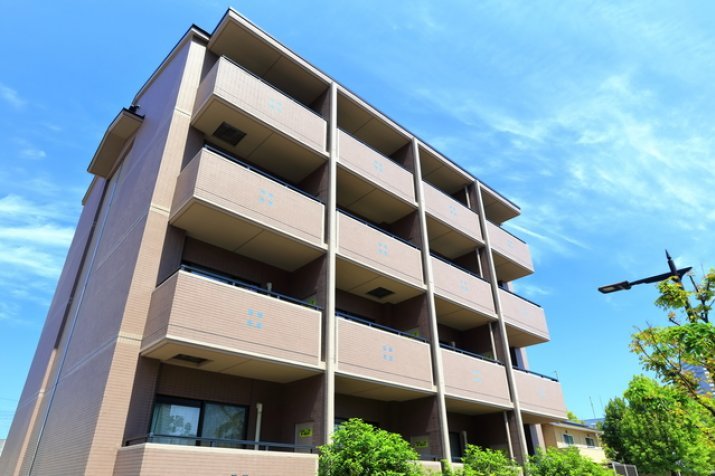
In Japan, the difference between a veranda and a balcony is whether or not it has a roof. It's important to note that the meanings differ between Japan and other countries.
This article explains the differences between verandas and balconies, as well as their respective advantages and disadvantages.
1.The difference between a veranda and a balcony is "the presence or absence of a roof."
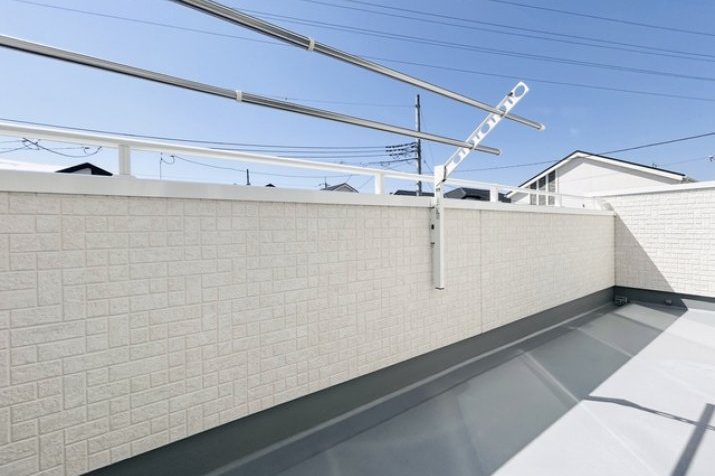
The difference between a veranda and a balcony is whether or not it has a roof.
If an outdoor space has a roof, it is defined as a "veranda." On the other hand, if it does not have a roof, it is defined as a "balcony."
*Both terms generally refer to outdoor spaces on the second floor or higher. Outdoor spaces on the first floor are typically called "terraces" or "private gardens."
In Japanese apartments and condominiums, covered "verandas" are common. On the other hand, "balconies" are more commonly found in detached houses.
There are also "roof balconies," which are open-air spaces without a roof, utilizing the roof (slab) of the floor below. While not common in rental properties, they are popular in condominiums.
Note that roof balconies are often common areas (with exclusive usage rights), and there may be regulations regarding usage, monthly usage fees, obligations to clean the drains, weight restrictions (for large planters, furniture, etc.), and handling requirements to avoid damaging the waterproofing layer. Be sure to check these before signing a contract.
The meanings of "balcony" and "veranda" differ between Japan and other countries.
What many people in Japan call a "veranda" is often called a "balcony" overseas.
In English, a balcony refers to "a platform that extends outward from the wall of a building and is surrounded by a railing." Whether or not it has a roof is irrelevant, as long as it's a railed space located on the second floor or higher.
In Japan, the term "veranda" is sometimes used in everyday conversation regardless of whether it has a roof or not, so remember this to avoid confusion.
2.Advantages and disadvantages of verandas and balconies

Advantages and disadvantages of balconies
merit
- You can hang your laundry out even on rainy days.
- Because it blocks sunlight, the room temperature tends to stay stable.
- It's easy to use for outdoor work and is resistant to wind and rain.
The fact that it has a roof makes it easy to use regardless of the weather. It's also characterized by features that make it easy to live in, such as being able to open the windows in light rain.
Disadvantages
- The natural light is weak, making the room feel a little dark.
Advantages and disadvantages of balconies
merit
- Bright, with excellent sunlight and ventilation.
- Perfect for home gardening and vegetable patching using planters.
- It has a great view and a sense of openness.
Disadvantages
- I can't hang out the laundry on rainy days.
- It tends to get hot in the summer.
- There's a possibility that your laundry could get wet in a sudden downpour.
3.Points to keep in mind when using a veranda or balcony in a rental property

Now, let's discuss four important points to keep in mind regarding verandas and balconies in rental properties.
Do not place anything that could obstruct evacuation.
Balconies and verandas are common areas (with exclusive use rights) and also serve as evacuation routes.
In particular, avoid placing objects in front of escape hatches (escape ladders) or partitions (break-down doors) between your unit and your neighbor's. Also, position clotheslines and planters in a way that allows for sufficient passage.
I will not undertake large-scale DIY projects.
In rental properties, verandas and balconies are common areas, so it is generally prohibited to perform any work that cannot be restored to its original condition, such as drilling holes, painting, tiling, or installing wooden decks.
Check with the property management company to see if a portable wooden deck or protective mat can be used as an alternative.
Be careful when smoking or using open flames.
If you smoke on your balcony, be aware that the smoke and odor can easily drift to neighboring properties.
In recent years, there has been an increase in properties whose management regulations prohibit smoking on balconies and the use of open flames (BBQ, portable gas stoves, etc.). Be sure to check your contract and management regulations.
Consideration for plants and sounds
Basic precautions for planters include not hanging them on the outside of railings, securing them to prevent them from falling, and using saucers to prevent water from dripping.
Furthermore, clogging drains with fallen leaves is prohibited.
Regarding noise, please be mindful of the time of day and volume when making phone calls, watching videos, or playing musical instruments. You can also reduce noises like chair dragging and footsteps by using vibration-damping mats.