



Things foreigners should know about how to read real estate advertisements and what to check
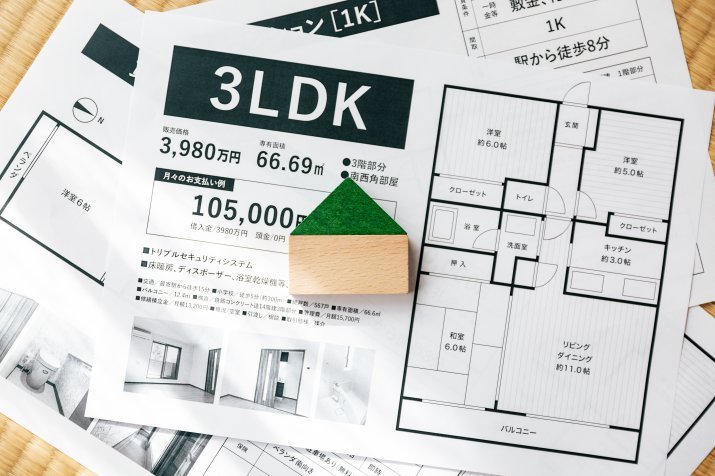
When looking for a home in Japan, you will often come across real estate advertisements.
However, for foreigners, Japanese real estate advertisements can be a little difficult to understand because of the technical terms they contain.
In this article, we will explain in an easy-to-understand manner how to read real estate advertisements and what to look for in real estate advertisements for foreigners looking for rental housing in Japan.
Please feel free to use this as a reference.
1.What is real estate advertising in Japan?

A real estate advertisement is an advertisement that brings together information such as photos and floor plans of rental properties in one place. It contains all the necessary information for people who want to rent a property.
There are detailed rules governing how real estate advertisements should be displayed.
Because the system prevents exaggerated advertising, it's important to make good use of real estate advertisements in Japan to find a home that suits you.
2.Meaning of numbers and terms in real estate advertisements
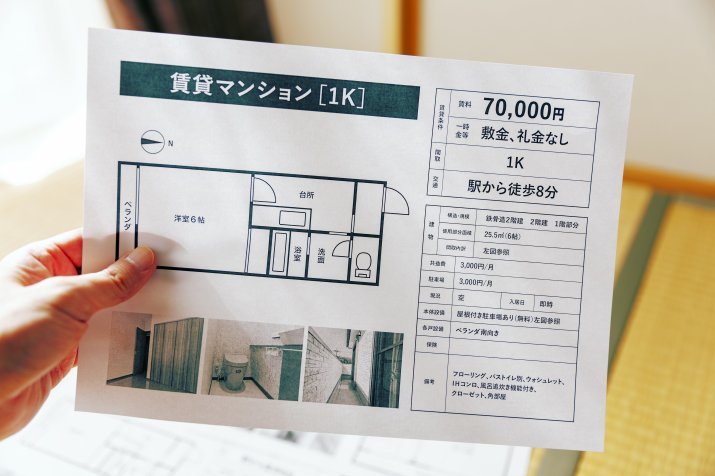
Japanese real estate advertisements use terms and expressions that are not often seen in real estate information overseas.
Here, we will explain some of the most representative examples.
Room layout
While floor plans such as "studio type" or "x bedrooms" are common overseas, in Japan a unique way of describing floor plans is used.
The following are floor plans commonly used in Japan and their contents.
| Floor plan | Content | Estimated number of residents |
1R (One-room apartment) | This is what is called a studio type overseas. The layout combines the kitchen and living room. | 1 person |
| 1K | The layout is a living room + kitchen. K stands for kitchen. | 1 person |
| 1DK | The layout is a living room + dining/kitchen. DK stands for dining/kitchen. | 1 to 2 people |
| 1LDK | This floor plan includes a bedroom plus a living/dining/kitchen (LDK) area. LDK refers to a room that serves as both a living room and a dining/kitchen area. It's similar to a one-bedroom apartment found overseas. | 1 to 2 people |
| 2K | The layout is a kitchen and two rooms. There is no dining kitchen. | 1 to 2 people |
| 2DK | The layout consists of a dining room, kitchen and two rooms. | 2 to 3 people |
| 2LDK | The layout consists of a living room, dining room, kitchen, and two other rooms. This is similar to a two-bedroom apartment overseas. The numbers below increase as the number of rooms increases. | 2 to 3 people |
When you see the floor plan of a rental property in a real estate advertisement, try to understand its meaning and imagine your life there.
Room size
Recently, the unit "m²" has come to be used in Japan to indicate room size, but there are still real estate advertisements that use the uniquely Japanese unit "◯ tatami mats".
"◯ tatami" is a unit of area that indicates the number of tatami mats.
In real estate advertisements, one tatami mat is defined as "1.62 square meters." Therefore, the room sizes commonly seen in real estate advertisements using "tatami" are as follows:
- 4.5 tatami mats (4.5 tatami mats) = approx. 7.29 m². A slightly small room
- 6 tatami mats = approximately 9.72 square meters. This is a typical room size in Japan.
- 8 tatami mats = approximately 12.96 m². A spacious room
- 10 tatami = approximately 16.20 m². About the size of a family living room
Japanese expressions
Japanese real estate advertisements often use unique Japanese expressions and explanations.
Among them, we have compiled a list of expressions that are particularly unfamiliar to foreigners and points to be careful of.
| Japanese expressions | Literal meaning | Actual meaning and supplement |
| Good sunlight | Good sunlight | It gets plenty of sunlight, but this varies depending on the time of day and the season. There is no objective standard. |
| Quiet residential area | Quiet neighborhood | It's a quiet residential area, but it's unclear how quiet it is. |
| Near the station | Near the station | Although it is close to the station, the exact distance and time may be unknown. |
| Good living environment | Good living environment | The statement was vague, stating that the surrounding environment was good, but no further details were given. |
| Good view | Nice view | It means the view is beautiful, but it's unclear what kind of view it is. |
| Renovated | Renovated | It is being renovated, but where, when and to what extent is up to the advertisers. |
| compact | Compact | It may be a gentle way of saying something is narrow. |
| Homely | Homey/Cozy | A subjective expression of comfort. It lacks specificity. |
| Good lighting | Good lighting | Natural light enters the room, but this varies depending on the time of day and direction. |
| Convenient life | Very convenient | There are commercial facilities nearby, but it doesn't say what they are. |
The ambiguous expressions unique to the Japanese language can be difficult for foreigners to understand. Whether this is an advantage for people who actually live there is another matter.
For example, a "quiet residential area" might be ideal for people who want a peaceful environment, but it also means that making noise or raising your voice is likely to result in complaints.
Therefore, it is important to use these expressions only as a reference and to actually see the property with your own eyes.
3.How to read real estate advertisements and checkpoints
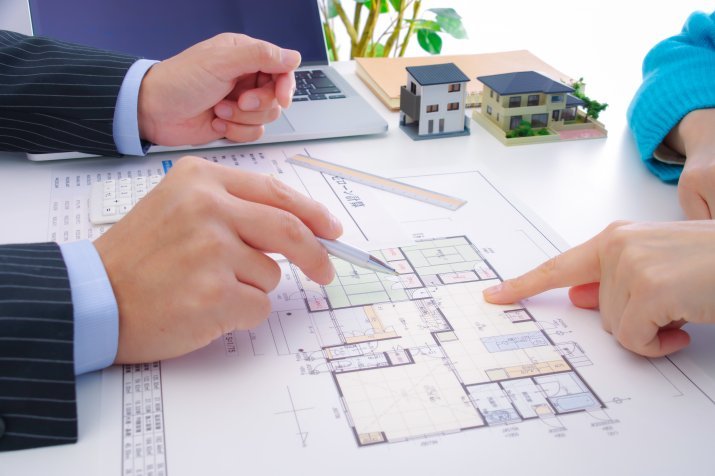
Now, let's take a look at the points you should pay attention to by referring to the information actually published in real estate advertisements.
[General information found in Japanese real estate advertisements]
| No. | item | Content |
|---|---|---|
| ① | location | Property address |
| traffic | How many minutes from ◯◯ station, etc. | |
| ② | Exclusive area | ◯◯㎡ or ◯◯ tsubo |
| Floor plan | ◯ Living room, dining room, kitchen, etc. | |
| structure | Reinforced concrete construction, etc. | |
| scale | ◯◯ units (total ◯◯ units) | |
| Floor number | ◯ floor (◯◯ floors) | |
| ③ | Completion (or age) | ◯◯ year ◯ month or ◯ years since construction |
| ④ | Rent | ◯ million yen |
| Management fees and common area fees | XX yen or none | |
| ⑤ | Deposit | ◯ months |
| key money | ◯ months | |
| ⑥ | Contract period | ◯ year |
| Renewal fee | ◯ months | |
| Period of occupancy | "Available for immediate occupancy" or "From XX month" | |
| ⑦ | equipment | Air conditioning, kitchen, auto-lock, etc. |
| ⑧ | remarks | Other Information |
| ⑨ | Direction | Often represented by symbols. |
①Location/Transportation
The property address and distance from the nearest station are shown.
In Japanese real estate advertisements, "1 minute on foot" is calculated as "80 meters." Generally, being within a 15-minute walk (approximately 1.2 km) of a train station is considered ideal, but you should consider this in relation to your own lifestyle.
② Area and floor plan, etc.
The floor area and layout refer to the specific room shown in the real estate advertisement, while the structure and size indicate the size and construction of the apartment or condominium itself.
③ Year of completion (or age of building)
It tells you when the building was built and how many years ago it was built.
In Japan, the age of a building is a very important factor when it comes to rental properties. Generally, the older a building is, the older the building and the facilities in the rooms tend to be. Therefore, the newer the building, the higher the rent tends to be.
On the other hand, older buildings often have cheaper rents, so one option is to deliberately look for older properties.
④Rent, management fees, and common area fees
The amount shown is the monthly rent. In Japanese, "10,000 yen" is equivalent to 10,000 yen, so for example, "45,000 yen" would be 45,000 yen. Be careful, as the units are different in English.
Management fees are the funds allocated for the overall management and operation of a building. For example, they are used for things like cleaning staff salaries and elevator maintenance costs.
The Common Area Maintenance Fee is used for the maintenance and management of shared spaces used by all residents.
The total amount to be paid per month will be "rent + management fee + common area fee", so be sure to check how much the management fee and common area fee will be.
⑤ Deposit and key money
Deposits and key money are difficult for foreigners to understand.
The security deposit is also known as a deposit overseas. If there is no excessive dirt or damage to the room when you move out, the security deposit will be refunded.
However, key money is money paid to the landlord as a token of gratitude for renting an apartment. It is a unique Japanese business rule and is not refundable when you move out.
The deposit and key money are usually displayed as a certain number of months' rent (the going rate is 1 to 2 months).
Recently, there has been an increase in properties that do not require a key money deposit, but since it still accounts for a large portion of the initial costs when moving in, be sure to check this as well.
For more information about security deposits and key money, please see this article.
⑥ Contract period, renewal fee, and tenancy period
In Japan, the typical lease term for rental housing is two years. If you wish to continue living in the same apartment after that period, you need to renew the contract. The cost incurred at that time is called a renewal fee. Renewal fees are generally expressed as a certain number of months' rent (the going rate is one month's rent).
If the tenancy period says "immediate occupancy available," you can move in immediately after signing the contract. If not, the date you can move in will be shown.
⑦Equipment
A list of the amenities available in the room, such as a kitchen, air conditioning, internet, and automatic lock, will be displayed.
Rental properties in Japan generally do not come furnished with furniture or appliances. Therefore, properties that do come furnished with furniture or appliances are often described in this amenities section.
⑧ Remarks
Other information is also listed, such as whether parking is available or not, and whether smoking is permitted in common areas.
⑨Direction
Since Japanese people prefer properties facing south, the direction a room faces is mainly indicated by symbols.
In Japan, the concept of passive design (a building design that maximizes solar shading in summer and solar gain in winter), which is common in Europe and the United States, is still not very prevalent.
So, pay particular attention to which direction your windows face.
4.How to spot a bait-and-switch listing

As explained above, understanding how to interpret Japanese real estate advertisements will make finding an apartment much easier.
However, real estate advertisements can also contain misleading information. This is known as bait-and-switch advertising.
A decoy ad is an ad that attracts customers by displaying a room with good conditions in the most prominent location, even though it is not actually possible to sign a contract.
The basic pattern of bait-and-switch advertising is that customers visit the agent looking for a certain room, but are told that the room has already been booked and are shown another room.
The following methods are effective in preventing foreigners from being deceived by misleading advertisements.
- Check to see if the same ad is running over and over again.
- First, confirm by phone or email whether the room is actually available for rent.
- Check the reputation of the real estate company online and on social media.
- Check advertisements from multiple real estate agents, not just one.
Bait-and-switch advertising is against the law and also violates real estate advertising rules, so be careful not to be fooled by bait-and-switch advertising.
5.Points that foreigners should be especially careful of
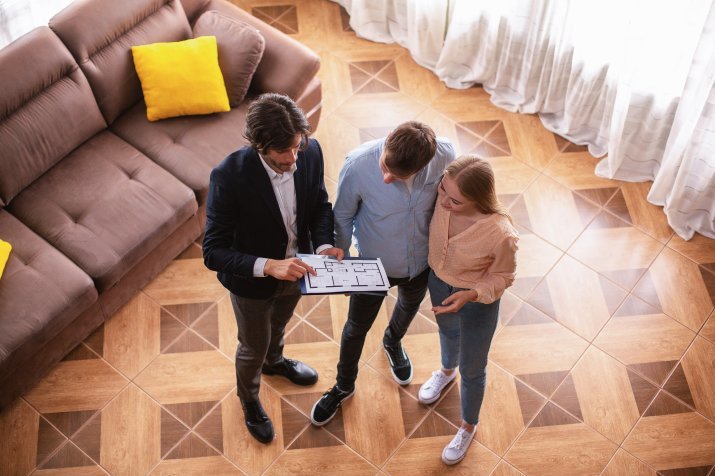
This article also explains important points to keep in mind when you find a room you like in a real estate advertisement.
Points to check when viewing a property
Once you find a room that interests you, contact the real estate agency and ask to see the room in person. This is called a "nai-kan."
Here's a summary of important points that foreigners should pay particular attention to when viewing an apartment.
- Does the bathroom have an exhaust fan? During Japan's rainy season, humidity is high, making bathrooms prone to mold. Check if there is an exhaust fan.
- Do you have delivery lockers? : Online shopping in Japan is very convenient and easy for foreigners to use. Having delivery lockers is very helpful because you can receive packages safely even when you're not home.
- What is the surrounding environment like? Real estate advertisements don't usually tell you things like whether there are convenience stores or supermarkets nearby. Be sure to check the surrounding environment as well as the room itself.
- Are there enough bicycle parking spaces (with or without roofs)? If you plan to use a bicycle, be sure to check the bicycle parking situation.
Guarantor
One of the biggest obstacles for foreigners when signing a lease for rental housing in Japan is finding a guarantor.
A guarantor is someone who assumes responsibility for paying the rent if the tenant is unable to do so. Generally, a guarantor must be a relative of the tenant who lives in Japan.
If you have difficulty finding a guarantor, you can use a guarantee company. Please check the real estate advertisement for details on this as well.
For more information about guarantors, please see this article.
Room sharing
While room sharing is common overseas, in Japan, unauthorized room sharing (even with family or a romantic partner) is considered a breach of contract.
If multiple people will be living in the same room, you must declare this in advance.
Unauthorized room sharing can lead to eviction. Please be careful.