



How much does it cost to eat in Japan for a single person? Explaining the average monthly cost and tips for saving money and cooking at home
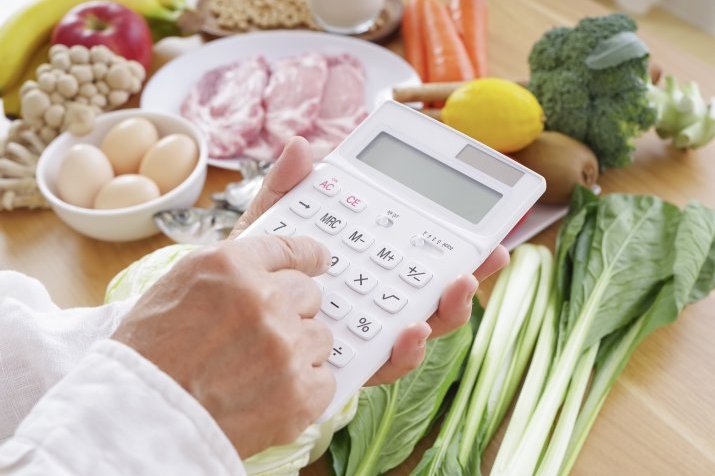
If you live alone in Japan, many people are probably wondering how much food costs will be.
In this article, we will explain the food costs for people living alone in Japan.
We also provide detailed information on how to keep food costs down in Japan, so please take a look.
1.What is the average monthly food cost for a single person?
According to the " Household Income and Expenditure Survey Report (2024)" by the Statistics Bureau of the Ministry of Internal Affairs and Communications , the average monthly food expenditure for a single person in 2024 was 48,204 yen.
Compared to the previous year, it has risen by about 5,000 yen, which is likely due to the significant impact of rising prices in recent years.
Food expenses by age and annual income are as shown in the table below.
[By age]
| age | Average monthly food expenses |
| ~34 years old | 40,305 yen |
| 35 to 59 years old | 47,673 yen |
| 60 years old and over | 43,472 yen |
[By annual income]
| annual income | Average monthly food expenses |
| up to 1.6 million yen | 34,563 yen |
| 1.6 million to 2.23 million yen | 40,585 yen |
| 2.23-3.19 million yen | 44,544 yen |
| 3.19 million to 4.78 million yen | 44,292 yen |
| From 4.78 million yen | 55,723 yen |
(Reference: Household Income and Expenditure Survey Report (2024) )
2.For someone living alone, a good guideline for food expenses is 10-15% of your income.
Generally, a good guideline for monthly food expenses is 10-15% of your net income.
If you allocate 15% of your income to food expenses, the estimated monthly food expenses would be as follows:
*Net income: Income after deducting social insurance premiums, resident tax, employee pension insurance premiums, and withholding tax on income from your gross salary.
| Take-home pay | Ideal food budget for one month |
| 2 million to less than 3 million yen | 25,000 to 37,500 yen |
| 3 million to less than 4 million yen | 37,500 to 50,000 yen |
| 4 to 5 million yen | 50,000 to 62,500 yen |
| 5 million to less than 6 million yen | 62,500 to 75,000 yen |
Compare your income to your food expenses and figure out how much you should limit them to.
3.Tips for reducing food expenses when living alone: Cooking at home
Now, let's look at some tips for reducing food expenses.
Be careful not to reduce the amount of food you eat or eat an unbalanced diet just because you don't want to spend money on food, as this could prevent you from getting the nutrients you need and could have an impact on your health.
In addition, when eating out or eating at a convenience store, various costs such as service fees and packaging fees are added on top of the cost of ingredients, so the meal is often more expensive than cooking at home.
[Expenses incurred if you eat out every weekday (for lunch, convenience store food, etc.)]
1,000 yen x 20 days of work = 20,000 yen
[Costs incurred if you eat a packed lunch every weekday]
300 yen x 20 days of work = 6,000 yen
*Assuming 20 weekday workdays / Comparison of lunch only
Even comparing weekday lunches alone, there can be a difference of around 14,000 yen between eating out and cooking at home.
Try to keep your food expenses down by following these four cooking tips.
Choose the cheapest ingredients possible
First, choose inexpensive ingredients and cook at home to keep expenses down.
Choosing inexpensive year-round ingredients or seasonal ingredients is recommended because they are readily available at reasonable prices.
[Examples of inexpensive ingredients throughout the year]
- bean sprouts
- Tofu
- Natto
- chicken breast
- minced pork
[Seasonal ingredients]
Spring: rape blossoms, asparagus
Summer: Tomatoes, cucumbers
Autumn: sweet potatoes, persimmons
Winter: Chinese cabbage, radish
Use discount supermarkets and wholesale supermarkets.
To buy groceries cheaply, it's important to make an effort to use supermarkets that offer large quantities or low prices on groceries.
In particular, Gyomu Super, which has over 1,000 stores across Japan, is known for its large quantities of food at low prices. When you hear the name Gyomu Super, you might think, "Isn't this something that ordinary people can use?", but in fact, ordinary customers are also very welcome.
Make sure to compare prices at local supermarkets using flyers and apps before making your purchase.
I shop during limited-time sales and special sale days.
Supermarket time sales and special sale days are a great opportunity to get groceries at a bargain price.
A time sale is a sale where products are cheaper only during a certain time period. A sale day is a sale where certain products are cheaper on designated days that are decided by each supermarket.
It's recommended to check for sale dates in advance using flyers, the store's app, or website.
Also, although it's not very common overseas, in Japanese supermarkets, you can sometimes find items at a reduced price if you go to the store a little before closing time.
If you want to save money on food, you should actively buy items on sale.
Prepare some food in advance
Preparing meals in advance using bulk-purchased vegetables, meat, fish, and other food items can help you save money.
Also, if you prepare food in advance on the weekend, you can quickly prepare lunches and dinners for work days, saving you time and effort. We recommend searching for "prepared meal recipes" to expand your repertoire.
4.Tip #2 for saving on food expenses: Avoid cooking at home
So far, I have been sharing cooking tips for yourself, but there are probably many people who are not good at cooking or who are too busy to do so.
If that sounds like you, please try the following tips and make an effort to save money.
Use discount coupons and points to save money on your meals
If you can't cook at home and have to eat out, you can save money on food by using restaurants that offer discount coupons or other special offers.
Some store apps offer coupons and discounted menus exclusively for app users. Make sure to install and check the apps of stores you frequently visit.
Decide your budget in advance
As mentioned at the beginning, a general guideline for food expenses is 10-15% of your income.
It is also important to set a reasonable monthly budget to stay within this amount.
Visualizing the amount of money available for food expenses allows you to calculate and manage your remaining budget when shopping or eating out.
Use a household accounting app to manage your finances wisely.