



What Are Security Deposit and Key Money in Japan?

When signing a rental contract in Japan, many foreigners are surprised by the existence of "deposit" and "key money."
In particular, key money is a system unique to Japan, and is one of the reasons why the initial costs when moving in are so high.
In this article, we will explain in detail the difference between security deposit and key money, the market price, and how to avoid paying them.
Please use this as a reference to successfully sign a rental contract in Japan.
1.The difference between security deposit and key money
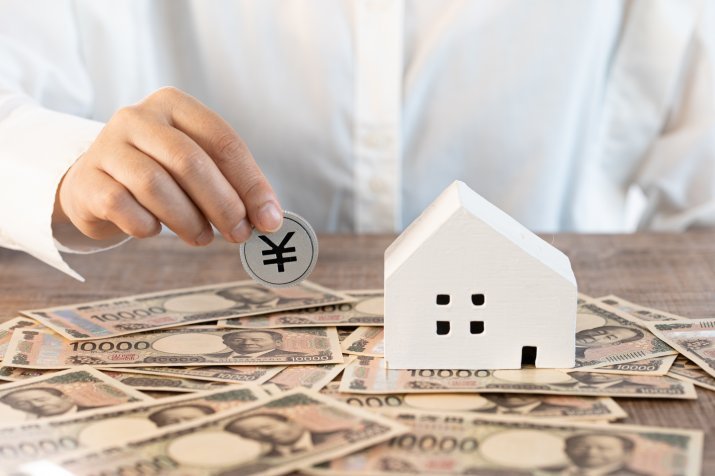
First, let's understand the difference between a deposit and key money.
- Deposit: A security deposit given to the landlord.
- Key money: A payment made to the landlord as a token of appreciation.
A security deposit is a common security deposit overseas. A certain amount is deposited with the landlord when signing a rental contract, and is used to cover overdue rent and repair costs in case of damage to the room.
Most rental contracts overseas are one-year contracts, and if you move out before the one-year period, your deposit may be confiscated as a penalty. However, in Japan, contracts are usually two years, and the penalty for moving out before the period differs depending on the contract terms.
Key money is a business practice unique to Japan, paid as a token of appreciation to the landlord. Although it has been on the decline recently, it is still commonly required.
Deposit and key money market rates
The average security deposit and key money rates vary depending on the region.
[Urban areas (Tokyo, Osaka, Nagoya, etc.)]
- Deposit: 1-2 months' rent
- Key money: 1-2 months' rent
[Local area]
- Deposit: 1-2 months' rent
- Key money: 0-1 month's rent
Generally speaking, both the security deposit and key money tend to be cheaper in rural areas than in urban areas. However, keep in mind that the security deposit and key money will vary depending on the location and the popularity of the property.
Are the deposit and key money refunded?
The deposit serves as a security deposit and will be refunded when you move out if there are no problems.
However, refunds will not be made in the following cases:
- If rent is in arrears
- When restoration is required
Restoring a property to its original condition is a rule that requires a tenant to return the property to the condition it was in when they first rented it when they move out. Because there are many disputes about how much of a property should be restored to its original condition, the Ministry of Land, Infrastructure, Transport and Tourism has established " Problems and Guidelines Regarding Restoration to Original Condition ."
According to this, damage caused by the tenant's negligence or intentional acts must be restored to its original condition, but dirt and deterioration caused by normal use are not the tenant's responsibility.
| Examples of dirt and deterioration due to normal use | - Dents in the floor or carpet caused by placing furniture - Wallpaper has faded due to sun damage or aging - Normal wear and tear on the flooring | No need to restore to original condition |
| Examples of tenant negligence or intentional damage | - Nail or screw holes in the wall ・Discoloration due to tobacco tar or odor ・Scratches and stains caused by pets ・Mold and corrosion caused by leaving water leaks unattended | Need to restore to original condition |
Generally, cleaning costs upon moving out are the responsibility of the landlord. However, if the tenant neglects to clean the property on a daily basis, cleaning costs may be deducted from the security deposit.
Key money is paid as a token of appreciation to the landlord and is not refundable when you move out.
2.How to avoid paying security deposits and key money

The combined deposit and key money can amount to several months' rent, so you'll want to avoid that burden if possible.
Here we will explain how to avoid paying security deposits and key money.
Search for properties with no deposit or key money
On Mooovin, you can easily search for properties with no deposit or key money.
On the property listing page, check "No key money or security deposit" to search.
Also, when you visit a real estate agency, if you request, "Please show me a room that does not require a deposit or key money," they will be able to introduce you to a property that meets your needs.
Things to note about properties with no security deposit or key money
In Japan, properties with no security deposit or key money are called "zero-zero properties."
Due to the increasing number of vacant homes caused by the declining population, the number of zero-value properties has been increasing in recent years. If you can find such a property, you can reduce your initial costs.
However, there are some properties that are unable to attract tenants due to reasons such as the building being old or in a poor location, and so they are waiving the deposit and key money.
There are also cases where the rent is higher than the market rate even if the deposit and key money are 0 yen.
Furthermore, while some properties advertise themselves as zero-zero properties, in reality they may ask for fees equivalent to a security deposit or key money under the names of "brokerage fees," "security deposit," "key replacement fees," etc.
In addition, there are many cases where the landlord is responsible for cleaning costs when the tenant moves out, but is instead charged for a 0 yen deposit.
Therefore, it is important not to be complacent just because there is no deposit or key money, but to carefully check the condition of the room and the terms of the contract.
Options include monthly apartments and shared houses
If your stay in Japan is short, you can also consider renting a monthly apartment or a shared house.
Monthly apartments and shared houses not only have no security deposit or key money, but also often come equipped with basic furniture and appliances, making them suitable for short-term stays.
3.Tips for foreigners to smoothly proceed with rental contracts

Not just in Japan, but in any country, when foreigners rent an apartment, there are certain preparations and things they should be careful about.
Here we will explain some points to help foreigners smoothly enter into a rental contract in Japan.
Find a reliable real estate agent
Japanese real estate contracts have unique rules and regulations, not just regarding security deposits and key money. For this reason, it is important to find a trustworthy real estate agent with whom you can communicate effectively.
There may not always be staff who can speak English, so it's a good idea to use a real estate agency that offers support for foreigners or a real estate introduction website that supports foreign languages.
Checking reviews on social media sites like Facebook can also help you find a trustworthy real estate agent.
Required documents and preparations
When signing a real estate lease, please prepare the following documents:
- Identification card (copy of passport or residence card)
- Guarantor's seal certificate and seal, or contract with the guarantor company
- Contractor's residence card
- Contractor's seal
Among these, the most important is the guarantor.
A guarantor is someone who is responsible for paying rent on behalf of the tenant if the tenant falls behind on rent or causes damage to the property.
In most cases, a guarantor is required when signing a rental contract in Japan. However, if you are a foreigner who does not have a relative or other person who can act as a guarantor, it is common to use a guarantor company that acts as a guarantor on your behalf.
If you use a guarantor company that provides services for foreigners, the process will go smoothly.
Precautions to avoid trouble
To avoid any issues when moving in or moving out, please carefully check the following details in your contract.
- Presence and amount of security deposit and key money
- Other initial costs and their amounts
- Is there a cleaning fee when moving out?
- Rules for restoring the property to its original condition when moving out
- Deposit return conditions
- Whether there is a short-term cancellation penalty
Contracts are generally written in Japanese, so be sure to ask the person in charge if you have any questions.
4.Summary: How to successfully complete a rental contract in Japan

Japan has its own unique rules regarding rental contracts, including security deposits and key money. Key money in particular is a non-refundable expense, and is by no means a small burden.
To keep initial costs down, you can also search for properties with no deposit or key money.
However, in that case, be sure to check that the rent is not set higher than the market rate and that there will be no additional costs when you move in or move out.
In order for foreigners to smoothly enter into a rental contract, it is important to find a trustworthy real estate agency with which they can communicate properly.
If you understand the rules regarding rental contracts in Japan and carefully check the contents of the contract, you will be able to find a comfortable place to live.