



What is a "maisonette"? We explain the differences between a maisonette, loft house, and terraced house, as well as the advantages and points to note when renting one.
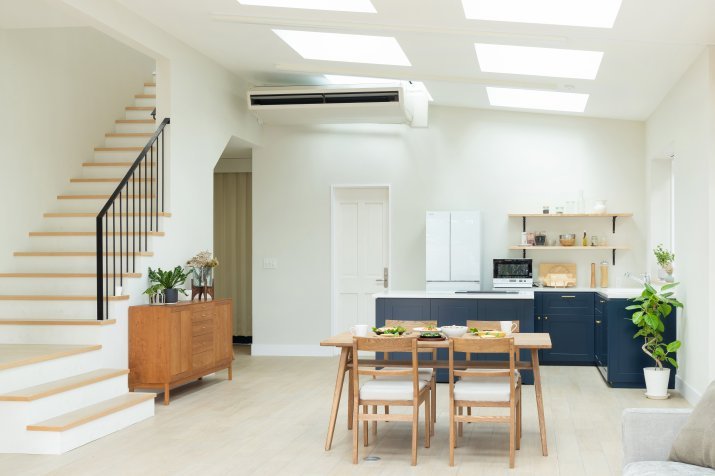
If you're looking for rental properties in Japan, you might come across the term "maisonette." What exactly is this unique type of property, which is a little different from a typical apartment or condominium?
This article provides a detailed explanation of maisonettes, from their basic characteristics to how they differ from other types of housing, their advantages and disadvantages, and even practical advice for finding a place to live in Japan, aimed at foreigners looking for accommodation.
1.What is a maisonette?
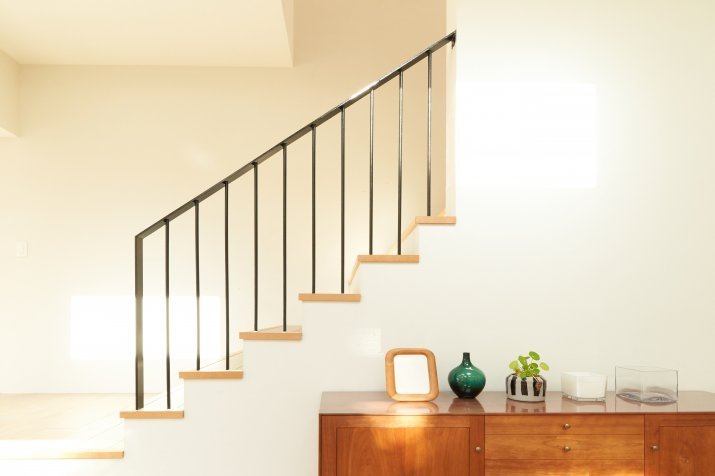
The word " maisonnette ," which means "small house" in French, simply refers to a two-story property located within an apartment building.
The biggest feature of these apartments is that, despite being located within an apartment or condominium complex, they allow for three-dimensional use of vertical space, much like a detached house. Typically, the first floor contains the living room, dining room, kitchen, and bathroom, while the second floor, accessed by stairs, often features private spaces such as bedrooms.
2.Differences from other property types
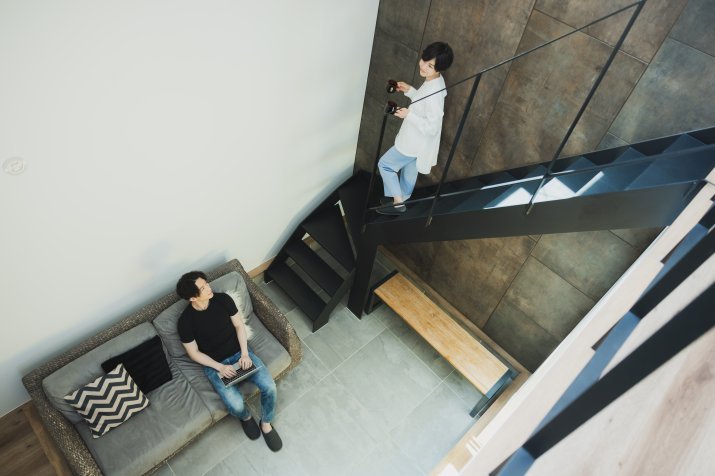
Similar styles of properties to maisonettes include "lofts" and "terraced houses."
Let's clarify the difference between these rooms and maisonettes.
The difference from a "loft" (whether or not it's on a separate floor)
A "loft" is a space created by raising the ceiling and making part of a room into a two-story space. At first glance, it may look similar to a maisonette, but under building codes, a loft is treated not as a "room" but as a "storage space (such as an attic storage room)."
The difference between a loft and a maisonette
| item | loft | Maisonette |
| Structure and handling | Mezzanine-like spaces not included in the floor area (e.g., attic spaces) | Living spaces on multiple floors connected by stairs |
| Size limitations | It is common for the floor below to be less than half the size of the lower floor. | No restrictions |
| ceiling height | 1.4m or less is common. | No restrictions |
| stairs | Many people use simple climbing methods such as ladders. | fixed stairs |
| equipment | Varies depending on the property and conditions (check for electrical outlets and windows). | Can be installed (windows, electrical outlets, air conditioners, etc.) |
| Main use | Storage and sleeping space | Living space (flexible floor plan including living room, dining room, kitchen, bedroom, etc.) |
The biggest difference between a maisonette and a loft is how the second floor is handled.
While the second floor of a maisonette-type apartment can be treated as a separate "room," the second floor (loft) of a loft-type apartment is treated solely as storage space. Although the loft can be used as a sleeping area, it may not be possible to install windows, electrical outlets, or other amenities. Furthermore, there are limitations on its size and height.
Differences from a "terrace house" (building structure and entrances)
A "terrace house" refers to a building where multiple detached houses are connected by sharing walls. Imagine individual houses linked together to form a larger structure. Each house may also have its own private garden or terrace.
The difference between a terraced house and a maisonette.
| item | terraced house | Maisonette |
| structure | The detached houses are connected by walls. | There are apartments with two or more floors within the apartment building. |
| Building independence | A row of detached houses | A separate room within an apartment building |
| Entrance/Exit Form | Each house has its own private entrance. | Similar to regular apartments and condominiums |
| Privacy | Since there are no units above or below you, noise is less of a concern. | If there are rooms on the floors above and below, there is a concern about noise. |
| common area | There are common areas such as corridors and gardens, and they are managed jointly. | Similar to regular apartments and condominiums |
The biggest difference between a terraced house and a maisonette is the building's construction.
A terraced house is essentially a detached house, although the units are connected by walls. A maisonette, on the other hand, is a single unit within an apartment building.
Because they are detached houses, terraced houses offer more privacy than maisonettes.
The difference between "duplex" and "duplex" (differences in terminology between overseas and Japan).
Real estate terminology can differ between overseas countries and Japan. Duplex and maisonette are examples of this.
- Duplex: This refers to a type of housing where one building is divided to accommodate two households, similar to the concept of a two-family home in Japan.
- Maisonette: In other countries, a maisonette can sometimes refer to a luxurious penthouse located on the top floor of a building, which may differ from the concept of a maisonette in rental properties in Japan.
You won't see the term "duplex" in Japanese rental property listings. If you're looking for a duplex-type property in Japan, try searching for "two-family home" rather than "maisonette."
Comparison Table: Comparison Table of Maisonette, Loft, and Terrace Houses
| item | Maisonette | Loft apartment | terraced house |
| Types of buildings | apartment complex (Apartments/Condominiums) | apartment complex (Apartments/Condominiums) | Detached houses connected by walls |
| Treatment of the second floor | living room | Storage space | living room |
| stairs | Fixed stairs | ladder (Often mobile) | Fixed stairs |
| ceiling height | Sufficient height for a living space | 1.4m or less | Sufficient height for a living space |
| Relationship with other dwelling units | There is a possibility that other residents live above, below, to the left, and to the right. | There is a possibility that other residents live above, below, to the left, and to the right. | Other residents are only on the left and right. |
3.7 advantages of living in a maisonette
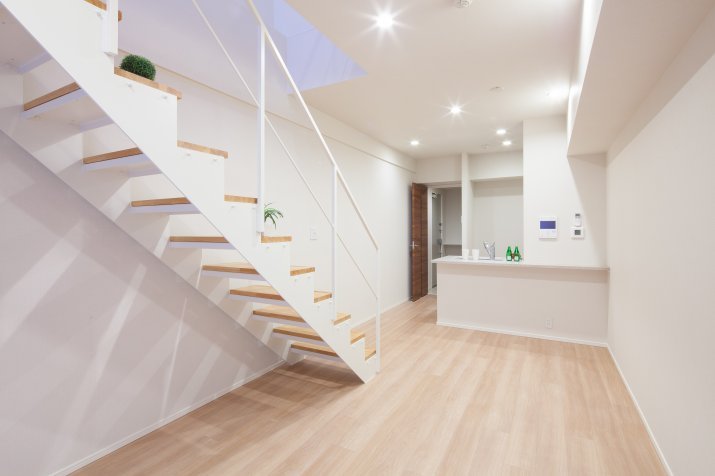
Now that you understand the features of a maisonette and how it differs from other types of apartments, let's look at seven advantages of living in a maisonette.
A sense of privacy like a detached house
A maisonette is a type of apartment building, but because the rooms are separated into upper and lower floors, it gives you the feeling of living in a detached house.
While the entrance area is shared with other residents, once you enter your room, you'll find yourself in a living space similar to that of a detached house.
Easy to divide living space
The fact that the floors are separated makes it easy to switch between work and leisure time, which is a major advantage.
For example, you could use the first floor as a public space where the family gathers, such as the living room or dining room, and the second floor as a private space for quiet relaxation, such as a bedroom or study.
For those who work from home in particular, the ability to completely separate work and personal spaces and create an environment conducive to concentration is a significant advantage.
The space has high ceilings and large windows, creating an open and airy atmosphere.
Because there are staircases, many properties have an open atrium structure and are designed with high ceilings.
Furthermore, because windows can be installed on both the upper and lower floors, the area of natural light is large, creating a bright and open atmosphere throughout the room.
You don't have to worry about making noise with your footsteps to the floor below.
Most maisonette-type apartments have the living room on the lower floor and the bedrooms on the upper floor. Therefore, even if children run around in the living room, noise problems from footsteps are less likely to occur compared to buildings with another apartment on the floor below.
This feature, which helps mitigate noise problems—a common issue in apartment buildings in Japan—is particularly popular with families with young children.
Enjoy unique and stylish interiors.
In a maisonette, you can take advantage of the high ceilings and spacious walls to enjoy unique interior design.
You can arrange your space in ways that would be difficult in a typical apartment, such as placing large houseplants, hanging artwork on the walls, or hanging pendant lights.
It is easy to ensure good ventilation and sunlight.
Because there are windows on both the upper and lower floors, it's easy to create airflow, allowing for efficient ventilation. Another great advantage is that it's less prone to dampness compared to single-floor properties.
Additionally, choosing a property with windows facing different directions ensures consistent sunlight throughout the day.
Perfect for living with pets
If the property allows pets, a maisonette offers a comfortable environment for pets as well.
Since pets can go up and down stairs indoors, it helps alleviate lack of exercise, especially for pets that enjoy vertical movement, such as cats.
4.Five things to keep in mind when choosing a maisonette.
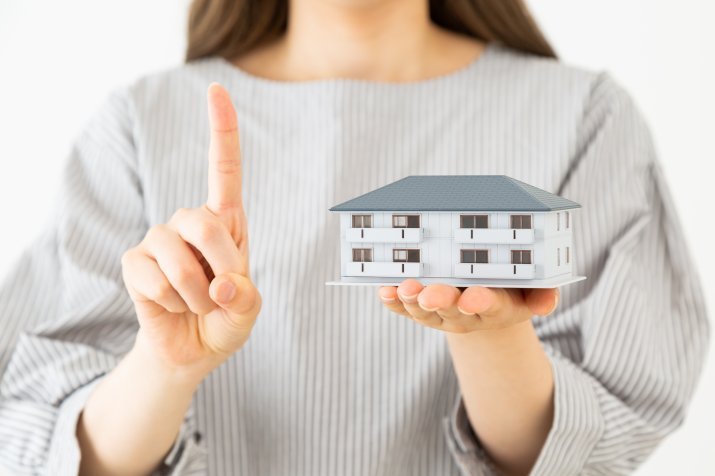
While maisonettes offer many advantages not found in typical apartments, it's also important to be aware of the specific points to consider when choosing one.
Going up and down the stairs is difficult.
Naturally, living in a maisonette involves going up and down stairs every day. While this might not bother you when you're young, it could become a burden as you get older.
Furthermore, carrying heavy items or moving a vacuum cleaner up and down stairs is difficult. Even when using a robotic vacuum cleaner, you have to move it around or place one on each floor.
Household chore routes tend to be long.
For example, in a floor plan where the kitchen is on the first floor and the balcony for drying laundry is on the second floor, the flow of movement for household chores, or the distance traveled, becomes longer.
Carrying laundry up and down the stairs is quite hard work. When viewing a property, it's important to simulate your lifestyle and the flow of movement within the space.
The heating and cooling may not be very effective.
Because of the open-plan structure, the space is large, making heating and cooling inefficient. In particular, in winter, warm air tends to accumulate on the upper floors, causing the first floor to feel cold.
In some cases, it may be necessary to install ceiling fans or put up curtains on the stairs, and utility costs tend to be higher than in a typical apartment.
The rent is higher than that of a typical apartment or condominium.
Due to their unique structure, which increases construction costs, and their rarity due to the limited number of properties available, maisonettes tend to have higher rents compared to typical apartments of the same size and area.
Difficult to find in the desired area
Because maisonettes are very rare among rental properties, if you have a specific area or station in mind where you want to live, it may be difficult to find a maisonette that meets your desired conditions.
5.Rent market rates and tips on how to find a rental property
One of the main concerns when considering living in a maisonette is the rent. This article will explore the average rent for maisonettes in major cities and discuss ways to rent one as cheaply as possible.
Average rent prices in major cities (Tokyo, Osaka, Nagoya, Fukuoka)
The following are the average rent prices for maisonette-type properties (1L to 2LDK) in major cities.
- Tokyo: 120,000 to 250,000 yen
- Osaka: 100,000 to 150,000 yen
- Nagoya: 100,000 to 150,000 yen
- Fukuoka: Around 150,000 yen
(Based on independent research from real estate websites)
As expected, Tokyo has the highest rents, while other areas seem to have similar rent levels.
For information on Japanese real estate terminology such as LDK and how to read real estate advertisements, please see " How to Read and Check Real Estate Advertisements That Foreigners Should Know ."
How different is it compared to an apartment of the same size?
Now, let's compare the rent for a typical room of similar size with that of a maisonette.
Average rent prices by property type (estimate)
| Property Type | Tokyo | Osaka | Nagoya | Fukuoka |
| Maisonette | Approximately 120,000 to 250,000 yen | Approximately 100,000 to 150,000 yen | Approximately 100,000 to 150,000 yen | Approximately 100,000 to 150,000 yen |
| Typical apartment | Approximately 100,000 to 180,000 yen | Approximately 70,000 to 150,000 yen | Approximately 60,000 to 100,000 yen | Approximately 60,000 to 100,000 yen |
*Average apartment rent is calculated from the Ministry of Land, Infrastructure, Transport and Tourism's " Housing Market Trends Survey ".
As expected, maisonette-type apartments have higher rents than regular apartments.
Tips for keeping rent down
Just because the rent is high doesn't mean you have to give up on the idea of living in a maisonette.
If you change your search criteria, it's entirely possible to find affordable maisonette apartments.
Tips for finding a cheap maisonette apartment
- Search for properties far from the station
- Search for older properties
- If you're looking in Tokyo, look outside the 23 central wards.
In Japan, the further a property is from a train station and the older the building, the lower the rent tends to be.
If you search using these criteria, you can find properties like the following maisonette.
- Kodaira City, Tokyo / 2DK Maisonette: Rent 57,000 yen
- Osaka / 21-minute walk from the station / 46 years old / 1SLDK maisonette: Rent 65,000 yen
- Fukuoka / 26-minute walk from the station / 1DK maisonette: Rent 51,000 yen
*As of July 2025
By changing the conditions in this way, it is entirely possible to keep the rent down even for a maisonette-type apartment.
6.Who is a maisonette suitable for, and who is it not suitable for?

Because it's a unique type of property, there are people for whom a maisonette is suitable and people for whom it is not.
People who are suited to living in a maisonette
Generally speaking, maisonettes are suitable for the following types of people:
- People who have different daily routines as a couple or spouse
- Freelancers and remote workers who work from home
- Families with young children
- People who want to place large furniture or carefully selected interior items.
For those who want to separate their living spaces and those who are particular about interior design, a maisonette-type apartment is a good choice.
People to be aware of before choosing a maisonette
On the other hand, the following types of people may not be suited to living in a maisonette.
- People who find going up and down stairs painful, or who are worried about the future
- People who want to prioritize efficiency in household chores
- People who want to keep their rent as low as possible
These people should carefully consider whether they truly need a maisonette-type apartment.
7.7 Checkpoints for Viewing a Property for Foreigners
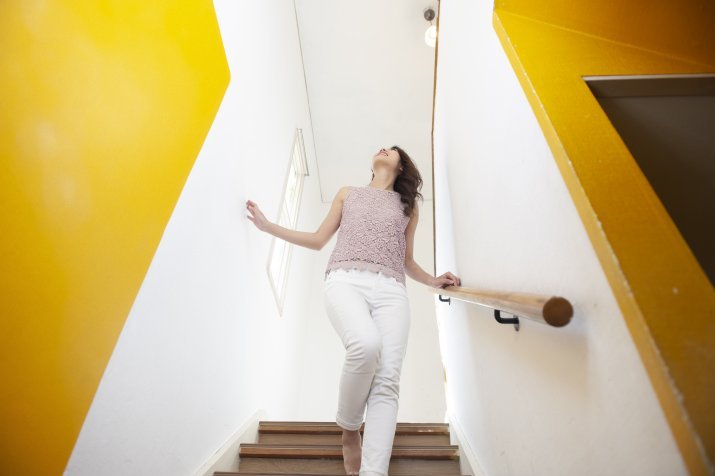
Finally, here's a summary of key points for foreigners to remember when viewing a maisonette-type apartment.
Are the width and slope of the stairs safe?
Safety is paramount when it comes to stairs, which are used daily. Check if there are handrails, if the stairs are not too narrow, and if the slope is not too steep.
In particular, if you have young children or elderly family members, please check carefully.
Can furniture and large appliances be brought in?
In maisonette apartments, the staircases are often narrow, making it difficult to carry large furniture and appliances (such as refrigerators, washing machines, and sofas) into the apartment.
When viewing a property, be sure to bring a measuring tape and measure the width of the stairs, hallways, and doors.
Are there enough electrical outlets in sufficient locations?
To avoid the problem of not having enough electrical outlets after you've moved in, check where and how many outlets are located on each floor.
In particular, it's a good idea to make a list of the electrical appliances you want to use on the upper floors.
How is the soundproofing of the wall between my room and the next one?
Japanese people are sensitive to noise. Even if you think you're living a normal life, your neighbors might find it noisy.
When viewing a property, ask the real estate agent for permission to lightly tap on the walls. If you hear a light knocking sound, the walls may be thin, and you might be able to hear your neighbors' daily lives easily.
Window location and direction
While having many windows is an advantage, their placement can affect privacy and room temperature. Check things like whether the interior is too visible from outside the windows, and whether the afternoon sun shines too directly into the room.
If your home has large windows, especially in an open-plan area, you may need to take measures to combat the summer heat.
Air conditioner installation status and outdoor unit locations on each floor
The recent heat in Japan is unusual. Please be sure to check whether air conditioning can be installed on each floor, or if it is already installed.
If your room has a high ceiling, it might be difficult to air-condition the entire room with just one air conditioner. Also, be sure to check the location of the outdoor unit.
Location of smartphone signal and Wi-Fi router
One thing that's surprisingly easy to overlook is the signal strength. When viewing a property, take out your smartphone and check if you can get a stable signal on both the first and second floors.
Since radio waves tend to spread downwards, it's best to place your Wi-Fi router on the second floor. Please check if that's possible.