



What Is a Renewal Fee (Koshinryo) in Japan?

Are you excited about your new life in Japan?
However, there are many aspects of Japanese rental agreements that are difficult for foreigners to understand.
"Renewal fees" are one example of this.
This article explains the "renewal fee," a unique Japanese real estate system that is rarely seen overseas.
This information is essential for both those looking to rent an apartment and those already living in rental housing in Japan, so please use it as a reference.
1.What is the "renewal fee" in Japanese rental agreements that surprises foreigners?
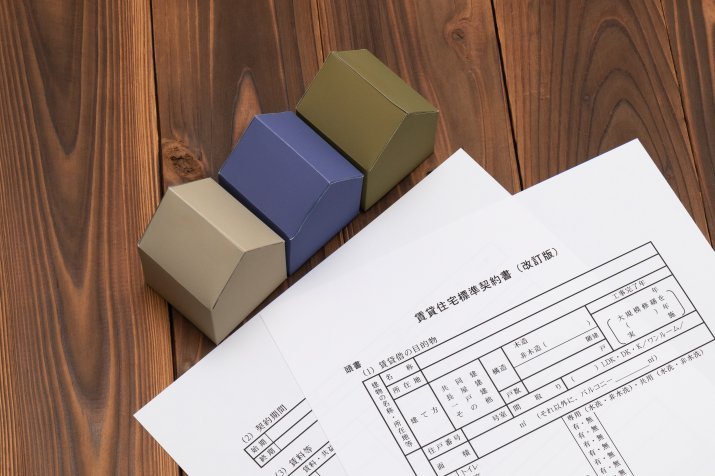
First, let me explain what a "renewal fee" is and how it works.
A renewal fee is "the cost of continuing a lease agreement."
Simply put, a renewal fee is "money you pay to your landlord in order to continue your current lease agreement for the apartment you're living in."
In Japan, rental properties are often leased for a period of two years. When that period ends, if the tenant wants to continue living there, they must renew the contract.
The fee required to renew that contract is called a "renewal fee."
This is probably a surprising system for foreigners.
This is because "renewal fees" are rarely requested overseas. Rental properties overseas are typically on a one-year contract basis, and when that contract ends, the tenant and landlord enter into a new contract. At that time, the terms of the contract (such as rent) are discussed again, and if both parties agree, a new contract is signed. Since it is a "re-contract" and not a "renewal," the concept of a "contract renewal fee" does not exist.
Therefore, many foreigners starting a new life in Japan wonder, "What is a renewal fee?" and "Why do I need to pay it?"
Why do landlords demand renewal fees?
There are historical reasons why landlords demand renewal fees.
The system of renewal fees in Japan was introduced after the war. It became widespread in urban areas when land prices began to soar, with the purpose of offsetting the difference between the old and new rents upon renewal.
As explained above, in Japanese rental agreements, the term used is "renewal," not "re-contracting."
Since it's a "renewal," the rent and other terms are generally carried over as they were in the initial contract. If the rent difference between this property and similar properties in the area widens during that time, the landlord will incur a loss. The renewal fee was created to cover that difference, and that practice continues to this day.
In modern times, the difference in rent upon renewal is not usually that large, but the renewal fee system continues as a service fee to avoid easily raising rent, and also to cover property maintenance costs.
Legal status
There is no legal basis for this renewal fee. Japan's "Land and House Lease Law," which sets out the rules for rentals, does not contain any provision requiring the payment of a renewal fee.
However, it is dangerous to think that you don't have to pay if it's not mandated by law. This is because the terms of the lease agreement are extremely important in Japan.
If the contract clearly states that "when renewing the contract, the tenant shall pay the landlord a renewal fee equivalent to one month's rent," and you sign it, then it becomes a formal contract between you and your landlord. This promise becomes legally binding, and in principle, you are obligated to pay.
In other words, paying the renewal fee is a "contractual obligation," not a "legal obligation."
In fact, the Supreme Court has ruled that renewal fees stated in contracts "have a complex nature, including supplementing rent, making advance payments, and serving as consideration for the continuation of the contract, and are therefore valid."
They're very similar! The difference between "renewal fee" and "renewal administrative fee"
When renewing a lease agreement, you may be charged a "renewal administrative fee," which has a name very similar to a renewal fee, but these two are completely different.
- Contract renewal fee: A fee paid to the landlord to renew the contract.
- Renewal administrative fee: This is a fee paid to the property management company for administrative procedures such as document preparation.
When renewing your contract, be sure to carefully check the details and amounts of each item.
2.Renewal fee rates and regional differences

Renewal fees are based on contractual rules, and therefore, these fees are not standardized nationwide.
In fact, the going rate can vary greatly depending on the region.
Nationwide average renewal fee (approximately one month's rent)
Nationwide, the going rate for renewal fees is "one month's rent."
In other words, if the monthly rent is 50,000 yen, the renewal fee will also be 50,000 yen.
Regional differences (often present in the Kanto region, but not in the Kansai region)
However, renewal fees can vary significantly depending on the region.
For example, in the Kanto region (Tokyo, Kanagawa, etc.), a one-month rent is common as a renewal fee, but in the Kansai region (Osaka, Hyogo, etc.), renewal fees are often not required. There is no custom of renewal fees. However, instead, security deposits and key money are often set high, equivalent to two to three months' rent.
However, these are merely general trends. It is important to carefully check each property individually.
Examples of properties that do not require renewal fees (UR rental properties - "No Renewal Fee" properties)
If you absolutely cannot accept the renewal fee, one option is to look for a property that does not require a renewal fee.
For example, if you choose a property managed by the Urban Renaissance Agency (UR), a so-called "UR rental property," you may find it easier for foreigners to move in, as there are no renewal fees, key money, brokerage fees, or even a guarantor required. However, popular properties are allocated by lottery, so there is no guarantee that you will be able to move in.
Recently, there has also been an increase in ordinary apartments and condominiums that advertise "no renewal fees" in order to compete with other properties.
How to find properties with no renewal fees and things to keep in mind.
Here's how to find properties with no renewal fees:
- UR Housing: Search by narrowing down your search criteria such as area, train line, rent, and floor plan on their dedicated website .
- For general apartments and condominiums: When searching for properties on real estate websites, check the "no renewal fee" option in the search criteria.
Note: Properties with "no renewal fee" may have slightly higher monthly rent than the surrounding market rate. It's important to calculate the total cost over two or four years to determine which option is truly more cost-effective for you.
3.Contract renewal process

When renewing your contract, keep the following points in mind.
Renewal procedures and schedule (4 steps)
The contract renewal process generally proceeds in the following four steps:
Step 1: Receive renewal notice
Three to one month before your contract expires, you will receive documents such as a "Contract Renewal Notice" by mail from your landlord or property management company.
Step 2: Document verification and return
Carefully review the contents of the documents sent to you, such as the "Lease Agreement Renewal Agreement" (checking for any changes to the rent or other terms). If there are no problems, fill in the necessary information, sign and seal the documents, and return them by the specified deadline.
Step 3: Payment of fees
Please transfer the renewal fee and other expenses (fire insurance premium, guarantee company renewal fee, etc.) to the designated account by the due date.
Step 4: Receiving the new contract
Once the process is complete, you will receive a copy of the new contract stamped with the landlord's/management company's seal. Please keep this safe until your next renewal or until you move out.
Other costs required at renewal (fire insurance premiums, guarantee fees, etc.)
The renewal fee is not the only payment required upon renewal. You will also need to pay the following fees:
- Fire insurance premiums: These are often purchased as part of a rental agreement, and the insurance period is typically two years. Therefore, when you renew your lease, you will also need to renew your insurance. The cost is typically around 10,000 to 20,000 yen for two years.
- Renewal fee for rent guarantee company: If you are using a guarantee company, you will also need to renew that contract. The fee structure varies depending on the guarantee company, ranging from 10,000 yen every one or two years, or "10% of the total annual rent."
If I move without renewing my lease, by when do I need to inform them?
Rather than paying a renewal fee, you might consider moving to a new rental property.
Of course, that's perfectly fine, but in that case, please inform the management company of your decision as soon as possible.
In most rental agreements, you are required to give notice at least one month before your planned move-out date. This is called the "notice period for termination."
Please be aware that delays in contacting us may result in having to pay an extra month's rent.
Basically, it's best to contact them when you receive a "renewal notice."
The difference between automatic renewal and renewal by agreement
There are two ways to renew your contract.
- Agreement to renew: This is the general renewal method described above, where the intention to renew is confirmed and documents are exchanged. In this case, a renewal fee will be incurred.
- Automatic Renewal: This type of contract automatically extends under the same conditions as before, even after the contract period expires, unless either the landlord or the tenant contacts the landlord or tenant. In this case, there are usually no renewal fees or administrative fees (depending on the contract), making it a very advantageous contract for tenants.
Please check your contract to determine which type of contract you have.
4.Frequently Asked Questions (Q&A)

Finally, we've compiled some frequently asked questions regarding renewal fees.
Q. Can I pay the renewal fee by credit card or in installments?
A: Bank transfer is the standard payment method. However, recently, the number of rental information websites that allow all payments to be made online has increased ( such as Mooovin ). In that case, it may be possible to pay renewal fees by credit card. Please inquire with the real estate company you are using.
Q. If I forget to renew my lease, will I be forcibly evicted?
A: Forgetting to renew your lease doesn't automatically mean you'll be asked to move out. However, it's important to contact the management company as soon as you realize your mistake and apologize sincerely.
Q. Are renewal fees required for shared housing or room sharing?
A: It depends on the terms of the property contract. Some share houses have renewal fees, while others do not. Also, some may require renewal at shorter intervals than regular rental properties (e.g., every year). It is important to carefully check the contract terms before moving in.