



A must-read for foreigners! Characteristics and points to note about condominium rentals in Japan

For those of you looking for rental housing in Japan, have you heard of "condominium rentals"?
While condominium rentals offer many advantages for foreigners, they are not very common in Japan, so you may not be familiar with them.
This article will explain the characteristics and points to note regarding condominium rentals in Japan, as well as how foreigners can utilize them.
1.What is a condominium rental?
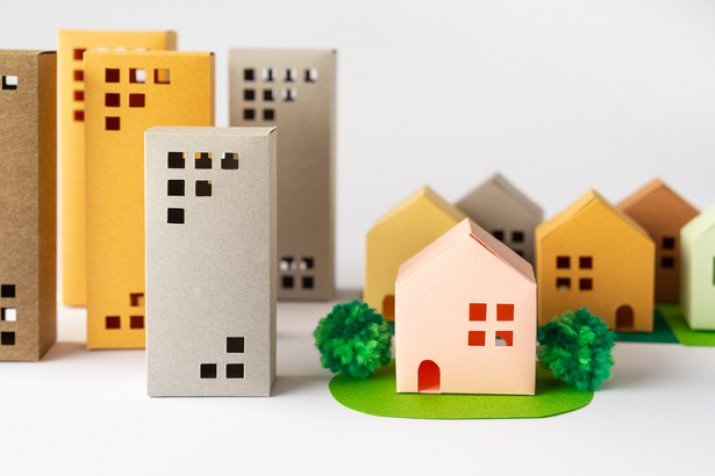
Since there is no direct English equivalent for "condominium rental," I will begin by explaining the unique style of rental housing in Japan.
First of all, rental housing in Japan can be broadly divided into two types: condominiums and apartments.
- Apartment building: A high-rise building, mainly made of reinforced concrete (RC), which is a luxury apartment complex with relatively high rents.
- Apartments: Primarily two-story buildings constructed of wood or light steel frames. These are generally affordable apartment complexes.
And there are two styles of apartments as well.
- Rental apartment: An apartment building constructed with the intention of being rented out. The entire building is owned by a single owner, who rents out each individual unit.
- Condominium: An apartment building constructed with the intention of being sold. Each unit has a different owner.
In other words, Japanese condominium rentals are real estate properties that are similar in style to "condominiums" overseas.
"Condominium rental" refers to a situation where the owner of a condominium they purchased rents out their unit as a rental property.
Differences from regular rentals
There are the following differences between general rentals and condominium rentals.
- For standard rentals, it's common to furnish the apartment yourself with your own furniture and appliances.
- Condominium rentals: Since the owner purchased the property to live in themselves, it often comes furnished with basic furniture and appliances.
In Japan, you generally need to provide your own furniture and appliances when renting an apartment. However, in the case of condominiums, the owners originally purchased the property to live in themselves, so they often rent out the rooms furnished with furniture and appliances.
Similarities and differences between overseas rental housing (condominiums)
After reading this far, many of you have probably thought, "So, in Japan, 'condominium rental' basically means a condominium." And basically, that understanding is correct.
Unlike in Japan, where there is a clear distinction between "rental apartments" and "condominiums for sale," it is quite common overseas for individual owners to rent out their own condominium units.
However, there are significant differences between condominiums overseas and condominiums for rent in Japan.
That is, "the number of condominiums for rent in Japan is overwhelmingly small."
In Japan, rental apartments and condominiums are distinguished from the start, so there aren't many people who rent out their own apartments.
Japanese condominium rentals come furnished with furniture and appliances, and can be rented with the same ease as a regular condominium, making them undoubtedly advantageous properties for foreigners.
However, please keep in mind that condominium rentals are not as common in Japan as they are overseas.
2.Features of condominium rentals
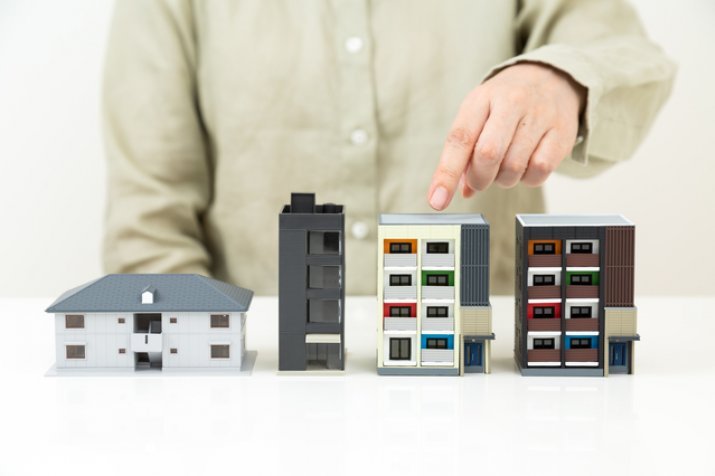
So, what are the characteristics of condominium rentals in Japan?
High-quality equipment and specifications
Because condominiums are built for buyers, many of them have high-grade interiors and amenities.
For example, you can expect features such as underfloor heating, ample storage space, excellent insulation and soundproofing, and high-grade kitchens and bathrooms.
Since they often come furnished with basic furniture and appliances, they are also recommended for foreigners living in Japan for the first time.
Reliable management system and security
In condominium buildings, the management company is responsible for maintaining the common areas, and in some cases, there are building managers or concierges.
The advantage of these buildings is that they often have excellent security features such as security cameras, automatic locks, and parcel delivery boxes, providing a sense of security.
The residents have good manners and are of good quality.
Condominiums that are sold for rent are generally inhabited by owners, so the residents tend to have relatively good manners.
Furthermore, because there are rules set by the management association, it tends to be easier to follow the rules when living in an apartment building.
However, this also means that foreigners unfamiliar with life in Japan will need to understand and follow the unique rules of Japanese apartment buildings.
For more details on this topic, please see "[ For Foreigners] A Complete Guide to Rules and Manners for Comfortable Living in Japanese Rental Properties ."
3.Points to Note When Renting a Condominium | What Foreigners Should Know Before Signing a Contract

After reading this far, you might be thinking, "If I were to live in Japan, I'd want to rent a condo!"
But before that, please understand the following points.
Rent tends to be expensive.
In other countries, renting a condominium is common, and the rent reflects this trend. However, in Japan, the average rent differs significantly between rental-only properties and condominiums for rent.
Because condominiums often have higher-grade facilities and buildings, the rent tends to be higher than that of surrounding rental properties.
When searching for a condominium to rent, be sure to compare it with the rents of other rental properties in the same area before making a decision.
However, just as condominiums generally have higher rents than apartments overseas, it's common in Japan for rental apartments to have higher rents than regular apartments.
There are few properties available.
As I explained earlier, the number of condominiums for sale and rent in Japan is very small.
Therefore, it's entirely possible that there are absolutely no condominium rental properties available in the area where you want to live.
In some cases, it may be a fixed-term lease.
In Japan, most condominiums that are for sale are put on the rental market because the owners want to rent them out only for specific periods when they are not living there themselves.
Therefore, the rental period is very often predetermined from the start. In Japan, this is called a "fixed-term lease."
In Japan, it's commonplace for tenants to extend their lease agreements if they wish, so fixed-term leases can be considered an unusual contract style.
However, fixed-term lease agreements are not uncommon overseas, and this may not be a major problem for people whose length of stay in Japan is fixed due to studying or working abroad.
However, please keep in mind that in the case of condominium rentals, the lease term may be predetermined.
For more information about fixed-term leases, please see " [For Foreigners] What is a Fixed-Term Lease? Explanation of the Difference from a Regular Lease and Points Foreigners Should Know ".
Trouble caused by the owner
In the case of condominium rentals, the owners are often individual landlords, and the management and support can be influenced by the landlord's personal circumstances.
If the owner isn't a professional, problems can arise with things like contracts, repairs, and rent payment procedures, so it's reassuring to check beforehand whether a real estate company is managing the property.
In addition, in apartment buildings and other multi-unit housing, there are "management regulations" established by the management association that all residents must uniformly abide by.
However, in the case of condominium rentals, there may also be additional rules set by the owner. For example, the building itself may allow pets, but that particular unit may not.
Since the rental agreement is made with the owner, you will naturally have to abide by the rules they have set for you.
Make sure to carefully review the contract details beforehand.
4.How to find and rent a condominium
Now, let's go over the steps and key points to consider when actually searching for a condominium to rent.
Trustworthy real estate companies and websites
Since the number of condominium rental properties is limited, it's a good idea to use multiple real estate portals and reliable real estate agencies in combination.
For example, on " Mooovin ," a real estate portal site exclusively for foreigners , there is a "Condominium rental" category in the property search criteria. By checking that, you can find condominium rental properties in your desired area.
If you can't find anything on real estate portal sites, it's a good idea to inquire about unlisted properties from local real estate companies.
Points to consider when viewing a property
When viewing a condominium for rent, please pay particular attention to the following points.
- Condition of walls, floors, and windows (presence of mold or water leaks)
- Check the operation of electrical, hot water, and air conditioning systems.
- Cleaning status upon move-in
- Storage and ease of use of the floor plan
- Noise and sunlight from neighbors
- Condition of common areas (elevator, garbage disposal area, parcel lockers)
- Contact information and emergency contact system for the property management company
To avoid problems later, be sure to take photos during your viewing.
Pre-contract checklist
Please confirm the following points before signing the contract.
- The type of contract (standard lease or fixed-term lease) and its duration. If it's a fixed-term lease, check the possibility of renewal.
- Whether or not a security deposit, key money, or guarantee deposit is required, and the conditions for its return.
- Brokerage fee, advance rent, and whether fire insurance is required.
- Whether a guarantor is required, and the conditions for using a guarantee company.
- Whether pets, musical instruments, and large groups of people living together are permitted.
- Scope of restoration to original condition upon vacating the property (what is the tenant's responsibility?)
For more detailed information on points to note when signing a rental agreement, please see " How to Read and Check Rental Agreements: What Foreigners Should Know ."
5.Frequently Asked Questions (FAQ)

Finally, we have compiled some frequently asked questions regarding condominium rentals.
Can foreigners sign contracts for condominium rentals?
Yes, foreigners can sign a lease. In Japan, refusing a rental agreement on the grounds that someone is a foreigner is considered discrimination and is not permitted. This is a fundamental rule.
However, there is also the concept of the "principle of freedom of contract." In other words, the owner of a room has the right to freely decide who they rent their room to.
Therefore, there are likely some landlords who are reluctant to rent to foreigners. In other words, it's not that being a foreigner automatically means you can't rent, but the reality is that a contract may be denied depending on the landlord's judgment.
Which is better: a condominium for rent or a regular rental apartment?
It's impossible to say definitively which is better; it depends on the borrower.
Here's a brief summary of the differences between condominiums for sale and rental apartments.
| Comparison items | Condominium for Rent | A typical rental apartment |
| Buildings and facilities | High-end specifications, good security and sound insulation → You can live there with peace of mind. | It has many standard amenities, and the building's grade is lower than that of a condominium. |
| Furniture and home appliances | Many amenities are provided → Easy to live in even immediately after arriving in Japan | You need to purchase the necessary items yourself → This incurs initial costs. |
| Contract terms | It varies from owner to owner. Understanding Japanese may be necessary in some cases. | The management company is unified and easy to understand. The process is smooth even for foreigners. |
| rent | Tends to be higher | It's relatively cheaper in the same area (but still more expensive than an apartment). |
| Management system | There is a management association, and they are usually well-organized. | Management is simple. There are significant differences depending on the building. However, the procedures and responses are relatively easy. |
| flexibility | There may be restrictions on the contract period and early termination. | Easy to accommodate short-term contracts and early termination. |
| Support for foreigners | It may not be possible depending on the owner. | There are also a relatively large number of properties that accept foreigners. |
To summarize, it looks like this.
- People who prioritize comfort and good facilities: Condominium rental
- People who prioritize ease of contracting and cost: Regular rental apartments
Please carefully consider what style of rental housing you are looking for before making your decision.
What should I be careful about when moving out of a condominium rental?
Since condominium rentals are based on the assumption that the owner will live in the property themselves, they are often very sensitive to damage and stains. Therefore, returning the room in a clean condition is a fundamental principle.
Please handle the provided furniture and appliances with care to avoid damage.
In the unlikely event that you cause significant damage or stains to the room's interior or facilities, you are responsible for restoring them to their original condition upon moving out. This is called "restoration to original condition."
Keeping photos and a list of furnishings from when you moved in is one way to prevent problems when you move out.
For more details on things to keep in mind when moving out, please see " How much are the average move-out costs? A guide to renting in Japan for foreigners ."