



[For Foreigners] A Complete Guide to Monthly Apartments in Japan: Features, Contract Methods, and Cost Comparison

While there are various types of rental properties in Japan, monthly apartments are recommended for short- to medium-term stays or as a base for finding permanent accommodation.
This article explains the characteristics, advantages, points to note, and contract procedures of monthly apartments in Japan for foreigners looking for rental properties.
1.What is a monthly apartment?
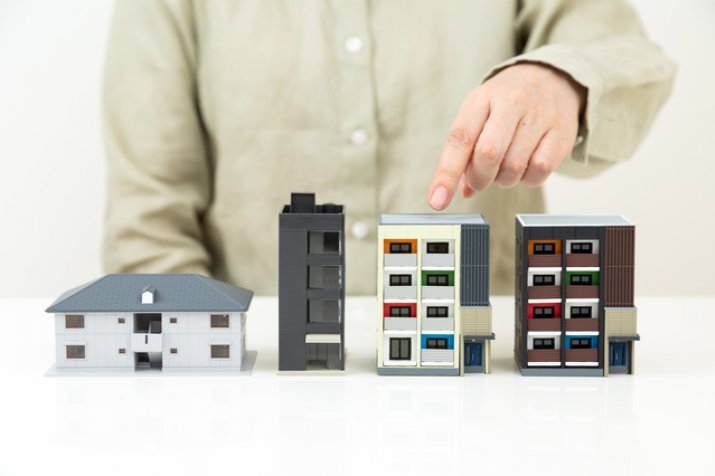
What is known as a "monthly apartment" in Japan is a type of rental property that is sometimes called a "serviced apartment," "short-term rental," or "furnished apartment" overseas.
A key feature of these rental properties, often called "monthly rentals," is that they can be rented on a monthly basis and typically come furnished with basic furniture and appliances such as a bed, refrigerator, washing machine, and table.
Therefore, this rental property is ideal for people on short-term stays for business trips or study abroad, or for foreigners who have just arrived in Japan and are about to begin their serious search for permanent housing.
Differences from typical rental housing
The biggest difference between a monthly rental apartment and a typical apartment or condominium in Japan is the contract period.
While typical rental properties in Japan are usually on a two-year contract basis, monthly apartments can be rented on a monthly basis, making them suitable for short to medium-term stays.
Differences between monthly apartments and regular rental housing
| Monthly apartment | Regular rental housing | |
| Contract period | Short-term contracts are available on a monthly basis. | Long-term contracts of one to two years are the norm. |
| Furniture and home appliances | Standard amenities include a bed, TV, refrigerator, washing machine, and microwave. | Basically, the apartments are furnished. You will need to purchase and install your own furniture. |
| Initial cost | No security deposit or key money required (cleaning fees may apply). | Multiple fees are required, including a security deposit, key money, brokerage fees, and guarantee company fees. |
| Lifeline contract | Electricity, water, and Wi-Fi are already arranged and ready to use. | Residents need to contract with each company and have the service activated. |
| Tenant screening | Many properties do not require a guarantor, and in many cases, you can sign a contract by showing your passport or similar document. | Tenant screening is required. A guarantor or guarantee company is often required. |
| Purpose of use | Business trips, studying abroad, temporary housing, etc. | Permanent residence or long-term residency |
Based on these differences, I will now explain the advantages and points to note regarding monthly apartments.
2.Advantages of monthly apartments

Now, let's look at the advantages of monthly apartments, especially from the perspective of foreigners.
Furnished with furniture and appliances
Many monthly apartments come equipped with a bed, TV, refrigerator, washing machine, microwave, and table, so you can start living there right away if you bring your own daily necessities.
Unlike in other countries, it's common for apartments and condominiums in Japan to be "unfurnished" and "unfurnished," so monthly apartments are a very convenient rental option for foreigners who have just arrived in Japan.
Furthermore, essential services such as electricity, water, gas, and internet are usually available immediately without requiring a contract.
No guarantor required
Japanese rental agreements have unique business practices. One such practice is the "guarantor," a person who assumes a legal obligation to pay rent and other payments on behalf of the tenant (contract holder) if the tenant defaults on payments. Guarantors are required to be family members or relatives of the tenant, but this is often difficult for foreigners to find.
However, monthly apartments often do not require a guarantor, and foreigners can sometimes sign a contract simply by presenting their passport or residence card.
Furthermore, since initial costs such as security deposits and key money are usually not required, it is a major advantage that it is easy for foreigners living in Japan for the first time to rent an apartment.
For more details regarding guarantors, security deposits, key money, etc., please see here.
Ideal for temporary accommodation during your visit to Japan.
Foreigners visiting Japan for the first time may find it difficult to enter into a standard rental agreement because they do not have a resident registration.
However, monthly apartments can often be rented with just a passport, making them ideal as temporary housing before relocating. Furthermore, they come furnished and equipped with utilities, allowing you to quickly adjust to life in Japan after moving in.
It's a good idea to stay in a monthly rental apartment for the first few months in Japan, using that time to seriously look for a permanent home and prepare for your move.
3.Disadvantages and points to note about monthly apartments

From here, we will explain the disadvantages and points to note that are unique to monthly apartments.
Long-term stays tend to be more expensive.
Because monthly apartments are rented on a monthly basis, the monthly rent is usually higher than that of regular rentals.
If you plan to live in a monthly apartment for more than a year, be aware that the total cost is likely to be higher than that of a typical apartment or condominium.
Handling of furniture and home appliances, and responsibility for damages.
If any of the provided furniture or appliances are damaged, the tenant is generally responsible for compensation and repair costs.
However, this does not apply in cases of deterioration due to aging or natural failure.
It is important to record the condition of furniture and appliances when you move in.
Fixed-rate caps/overcharges for utilities and Wi-Fi
While utilities and Wi-Fi are often included in the rental fee, there are cases where you may be charged extra if you exceed a certain usage limit.
When using air conditioning for extended periods during hot or cold seasons, be mindful of usage limits. Also, there are several types of internet connections, including Wi-Fi (wireless), wired LAN, and rental routers, and these may have data usage limits or speed restrictions.
Please check the types of facilities and usage rules before applying.
Cancellation and refund policy (before/after move-in)
If you cancel after applying, you may be charged a handling fee or cancellation fee. Also, if you move out early during the contract period, you may not receive a refund for the remaining period's rent, or you may be charged a penalty fee.
Since regulations vary from property to property, be sure to check the cancellation and refund policy before signing a contract.
How to find properties that offer English or multilingual support.
Real estate companies and brokerage websites that cater to foreign users offer support in multiple languages, including English, Chinese, and Korean.
For example, Mooovin, a rental brokerage service for foreigners, handles inquiries in multiple languages and also introduces monthly apartments.
4.Cost structure of monthly apartments
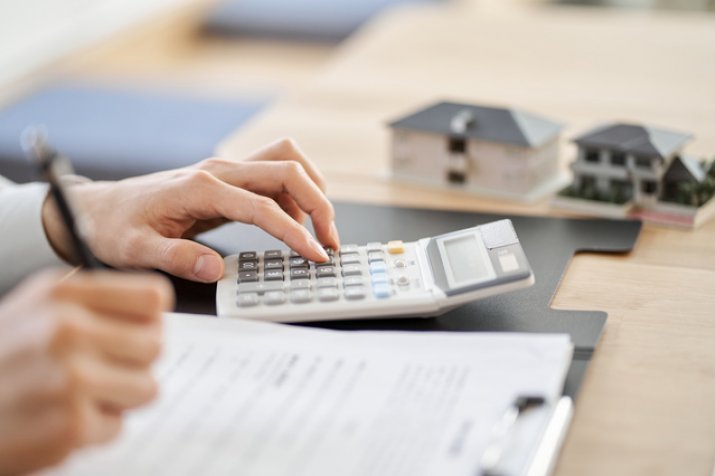
Monthly apartments have a slightly different cost structure compared to regular rental properties.
Breakdown of charges
The monthly apartment fee is comprised of the following components:
- Basic fee: Monthly rent. Includes furniture, appliances, and equipment costs.
- Cleaning fee: This is the cost of cleaning the room after you move out. It is usually paid in a lump sum upon moving in and is a fixed amount regardless of the contract period. However, additional charges may be incurred if the room is significantly soiled.
- Utilities and Wi-Fi: While these are included in the basic fee for most properties, exceeding the limit will result in additional charges. Wi-Fi facilities come in several types, including wired connections and mobile routers, so be sure to check for any data limits before choosing.
- Other costs: Optional bedding rental fees, extension fees, and damage insurance may be required.
Cost comparison simulation with standard rentals.
We will illustrate the costs of a typical rental apartment and a monthly apartment, and compare the total costs for a 3-month and a 6-month stay.
We calculated the costs based on a similar floor plan, using a regular apartment rent of 60,000 yen per month and a monthly rental apartment rent of 80,000 yen per month. The initial costs for a regular apartment include a security deposit and key money.
| Length of stay | Monthly apartment | General apartment | ||
| total amount | Monthly conversion | total amount | Monthly conversion | |
| 3 months | 280,000 (Initial costs 40,000 + rent 80,000 x 3) | 93,333 yen | 360,000 (Initial costs 180,000 + rent 60,000 x 3) | 120,000 yen |
| 6 months | 520,000 (Initial costs 40,000 + rent 80,000 x 6) | 86,667 yen | 540,000 (Initial costs 180,000 + rent 60,000 x 6) | 90,000 yen |
This simulation is only an estimate, and there will be differences depending on the property and location. However, as a general guideline, for short-term stays of around 3 months, monthly apartments will be cheaper in terms of total cost, while for long-term stays of 6 months or more, regular apartments will be cheaper.
5.Pre-Contract Checklist (Practical Guide for Foreigners)

This article summarizes the necessary documents and points to note when foreigners sign a monthly apartment lease.
Required documents
When foreigners sign a contract for a monthly apartment, they are often required to provide the following documents:
- Passport: Required as proof of identity. Please check your visa type and expiration date.
- Residence Card: For mid- to long-term residents, you will be asked to submit it to verify your residence status and period. For short-term visitors, some properties can be rented with just a passport.
- Contact information: Current address, phone number, and email address. If you do not have a contact address in Japan, please enter an overseas address.
- Employment information and student ID: You may be asked for company name, school name, or proof of enrollment to verify your purpose of stay and identity.
- Credit card information: Required for rent payment. Many properties accept credit card payments.
Property rules and move-out fees
Monthly rental apartments have their own set of rules for each property. The main points are as follows:
- Pets and Smoking: Pet policies and indoor smoking policies vary by property. Smoking in a non-smoking property may result in charges for wallpaper replacement.
- How cleaning fees are calculated: Cleaning fees are paid upon move-in, but additional charges may apply if the property is heavily soiled upon move-out. Please check your contract beforehand.
- Cost of repairs for damaged furnishings: If you intentionally or negligently damage items such as televisions or microwave ovens, you may be charged for repair costs or the cost of purchasing new ones. It is a good idea to take photos of the condition of furnishings when you move in.
- Prohibition of disruptive behavior towards other residents: You must abide by the same rules as other residents regarding noise, garbage disposal, etc. Please be mindful of proper conduct in a shared living environment.
For more information on the rules and manners to follow when renting a property in Japan, please click here.
6.How to sign a contract for a monthly apartment and the process involved.

Now, let's look at how foreigners can actually rent a monthly apartment.
General steps leading up to a contract
The contract process for a monthly apartment generally proceeds as follows:
- Inquiry/Application: This is a rental brokerage service for foreigners. You can check availability and rent, and apply for a property you like.
- Submission of application form: You will need to submit an application form that includes your name, address, and length of stay, along with identification documents such as your passport or residence card.
- Screening: The operating company will review your application to check for a guarantor and your ability to repay. You will be notified of the screening results within a few days.
- Contract signing and payment: After signing the contract, you will pay the rent, cleaning fees, and other charges in a lump sum. Please confirm the payment method in advance, such as credit card payment or international money transfer.
- Key handover and move-in: You can either receive the keys on-site or use a smart lock to move in. Check-in procedures vary depending on the property.
The specific details and procedures may vary depending on the real estate agent, so please follow their instructions.
The increase in online contracts and points to note
In recent years, online contracts have become commonplace, and the number of properties where applications, payments, and contract signings can be completed even from outside Japan is increasing.
For online contracts, you will need to carefully read the terms of service and contract details before signing electronically. Similar to in-person contracts, you will need to submit a copy of your identification document. Failure to do so may result in your inability to move in, so please check the document upload method and data format carefully.
If you wish to enter into a corporate contract or agency agreement
If you are renting multiple rooms for business use or as employee housing, you can sign the contract in the name of your company.
Corporate contracts require additional documents such as a company registration certificate, seal certificate, and the contact person's business card. For agency contracts, please also prepare a power of attorney and the contractor's identification.
7.Common problems that occur after signing a contract and how to deal with them

Procedures and costs for early departure/extension.
Please check in advance the terms regarding penalties for early departure, cleaning fees, and extension fees (whether the rate remains the same or if there are discounts). Whether renewals are automatic or require application each time also varies by property.
Regarding equipment damage and cleaning costs, etc.
If you damage any of the room's furnishings, you will generally be charged for the repairs when you move out. Taking photos or other records of the room's condition upon move-in can help avoid unnecessary problems.
Cleaning fees after moving out are often paid in a lump sum upon moving in, but this varies depending on the property, so be sure to check the costs and payment timing.
8.Case study

Taking into account the unique characteristics of monthly apartments, here are some examples of situations in which they are recommended for foreigners.
Short-term business trip (1 month)
For those visiting Japan on a short-term business trip, such as a month, a monthly apartment, furnished with furniture and appliances and ready to move into immediately, would likely be the first option that comes to mind.
Many monthly apartments are located near train stations, offer larger rooms than typical hotels, allow you to cook your own meals, and have internet access, making them very convenient for work.
It would be a good idea to compare monthly apartments, considering factors such as price and amenities, focusing on several stations along the train line where your workplace is located.
International students (3-6 months)
Monthly apartments are a great option for international students coming to Japan. They are especially convenient if you plan to return to your home country, as you won't need to furnish them with your own furniture and appliances.
If your study abroad period exceeds three months, you will need to register your residency. While residency registration requires an address, you can register using a monthly apartment address if you can prove that you are actually living there (e.g., your name is on the rental agreement, or your mail shows that you are living at that address).
However, since procedures may vary depending on the municipality, it is recommended to check with the management company in advance whether it is possible to register your residency using the address of the monthly apartment.
Pre-relocation stay (1-3 months)
Using a monthly apartment is also a good option for temporary housing while moving to Japan. Many monthly apartments can be rented with just a passport, so it's a good idea to stay in one in the area you want to live in first, and use that time to look for permanent housing and prepare for life in Japan.
9.Frequently Asked Questions (FAQ)

Finally, we've compiled a list of frequently asked questions and answers regarding monthly apartment rentals in Japan for foreigners.
Can I get a loan with a short-term visa?
Yes. In many cases, it is possible to enter into a contract. Even if you are coming to Japan on a tourist visa or short-term business visa, you may be able to enter into a contract if you submit your passport as identification. However, there may be restrictions on the contract period depending on your visa status and duration, so be sure to check the property's regulations in advance.
Is a residence card required?
While long-term residents typically present their residence card, short-term visitors may be able to sign contracts using their passport in some cases. In either case, identification documents are required, so please check the necessary documents before signing a contract.
Is a corporate contract possible?
Yes. Corporate contracts are common for companies to rent monthly apartments for employee housing or for long-term business trips. You can enter into a contract in the company's name by preparing additional documents such as a company registration certificate and the employee's business card.
Can more than two people live there?
Some properties can accommodate two or more people. However, there may be an additional charge for extra beds or bedding. When applying, be sure to inform them of the number of people and confirm the size and whether bedding is included.
H3: Can I keep a pet?
While pet-friendly monthly apartments do exist, there are often restrictions on the number and type of pets allowed. Pet-friendly properties tend to have higher cleaning fees and security deposits, so if you wish to bring your pet, it's best to search through specialized websites or real estate agencies.
Can I change my residency registration even if I'm living in a monthly rental apartment?
If you can prove that you are actually living at that address, such as by having a rental agreement in your name or by having mail indicating that you are living there, you can register your residency even if you are renting a monthly apartment.
However, if you are already registered as a resident in Japan and are moving to a new address, you will need to submit a moving-out/moving-in notification (this is called "transferring your resident registration"), but whether or not this is possible with a monthly apartment varies depending on the municipality.
Please check with the local government or management company in advance.
Can a duplicate key be made?
While it varies by property, many management companies prohibit the creation of duplicate keys for security reasons. If you need an additional key, consult with the management company and ask if you can borrow a spare key or if they can provide one for a family member.